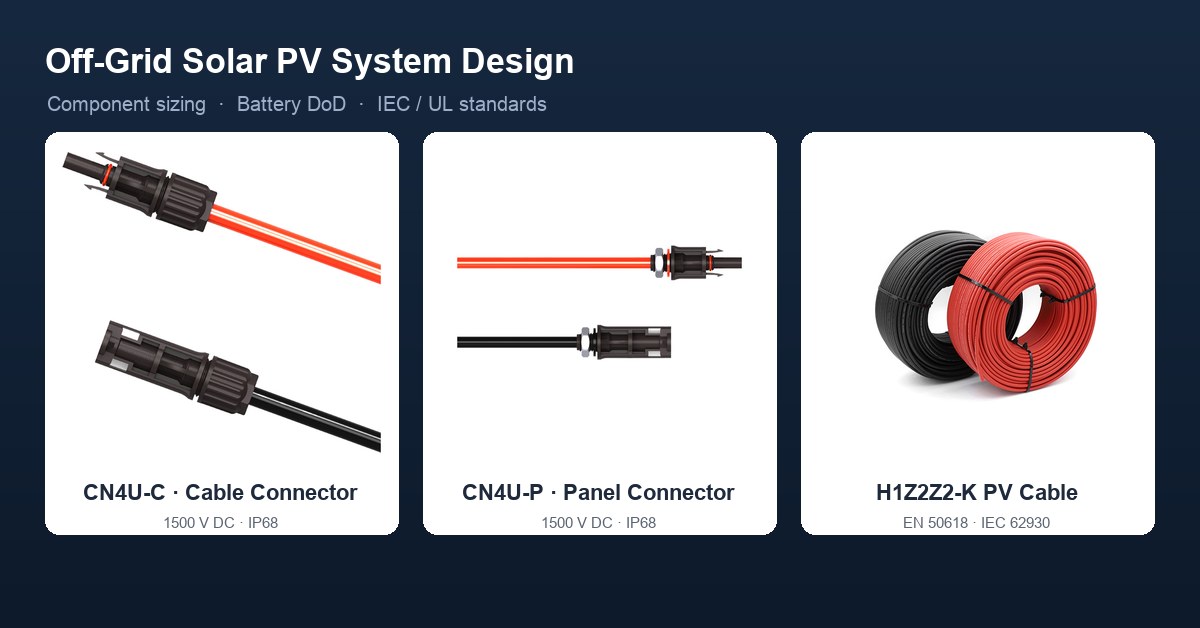
Off-Grid Solar PV System Design: Component Sizing, Battery Selection and Safety
Off-grid solar system design: load audit, battery DoD, inverter surge sizing, MP…

How the parts work, why they fail, and what the standards actually require.
The knowledge section explains how the parts actually work. It covers the topics that come up most often in technical enquiries: how a crimped contact is inspected, why contact resistance matters more than the mated-pair voltage rating in a real installation, how to size a DC cable for bundled routing, and what the difference between a TÜV and a UL certificate actually means for a connector you are about to buy.
Articles here are the long-form counterparts to the pillar pages, and each one links back to the products and categories it applies to. If you are looking for a specific rule rather than an explanation, the PV connector standards and cross-mating guides carry the reference material.
Off-grid solar system design: load audit, battery DoD, inverter surge sizing, MP…
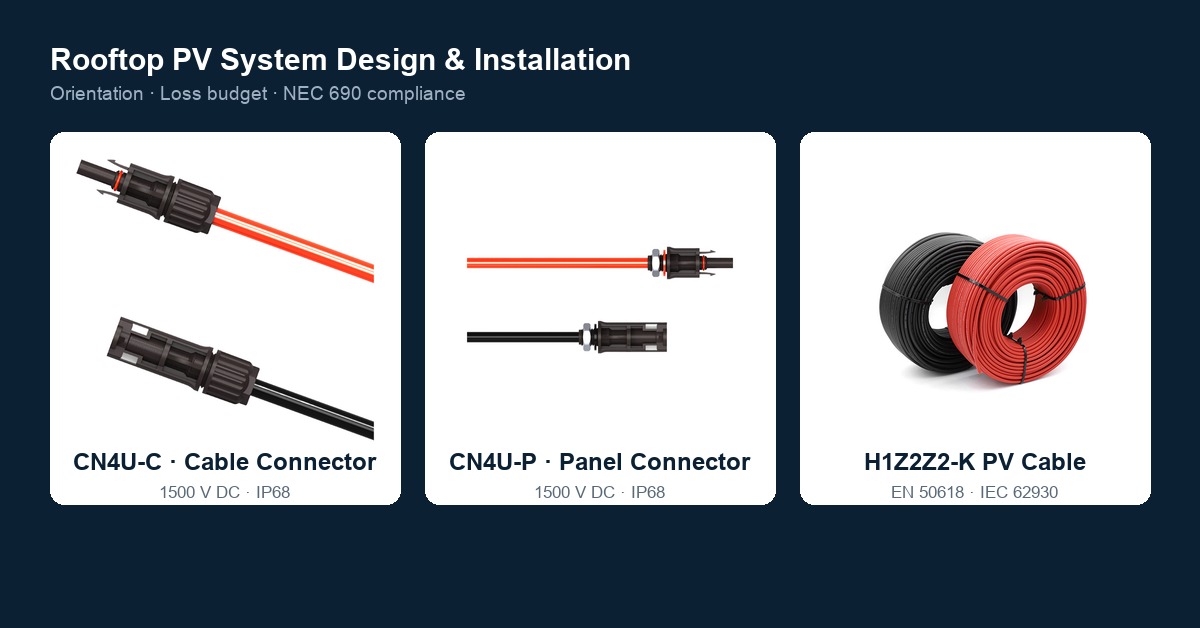
Rooftop PV design: tilt, azimuth, loss budget, string sizing (Isc x 1.25), rapid…
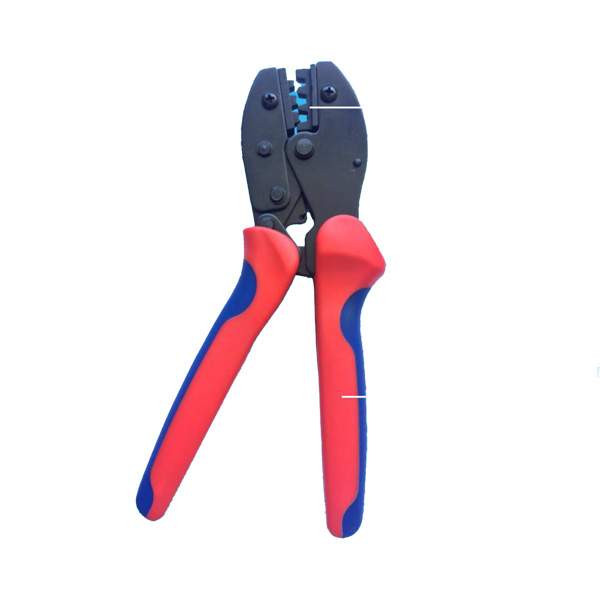
MC4 crimping tool guide: crimp range for CN4U connectors (2.5-16 mm² / 14-6 AWG)…
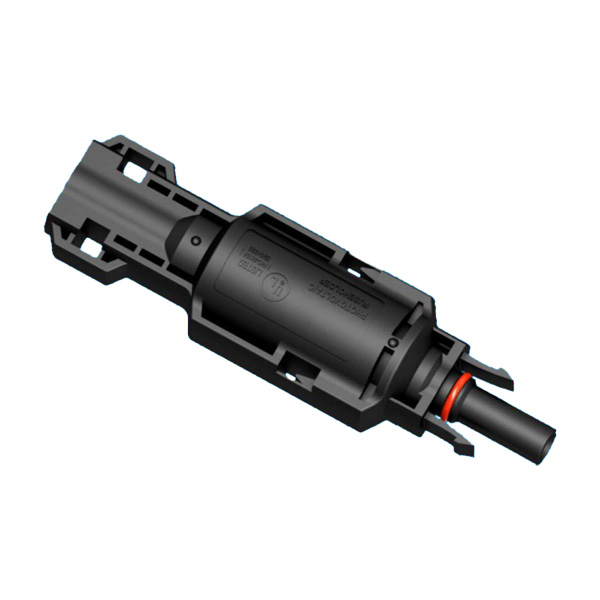
How to select a PV diode connector: D4A (1-8 A, 1000 V TUV / 600 V UL, IP68) vs …

How to select a solar fuse connector: 10.3x85 vs 10.3x38 fuse bodies, 1500 V vs …
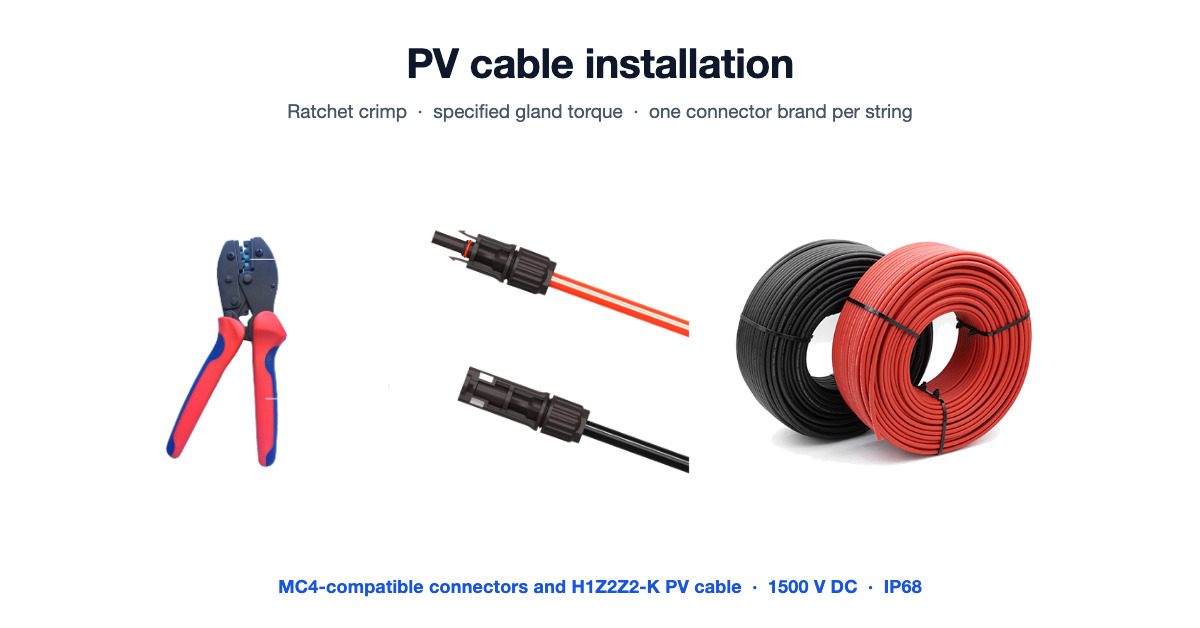
PV cable installation guide: MC4 crimping specs, routing, bending radius, ground…
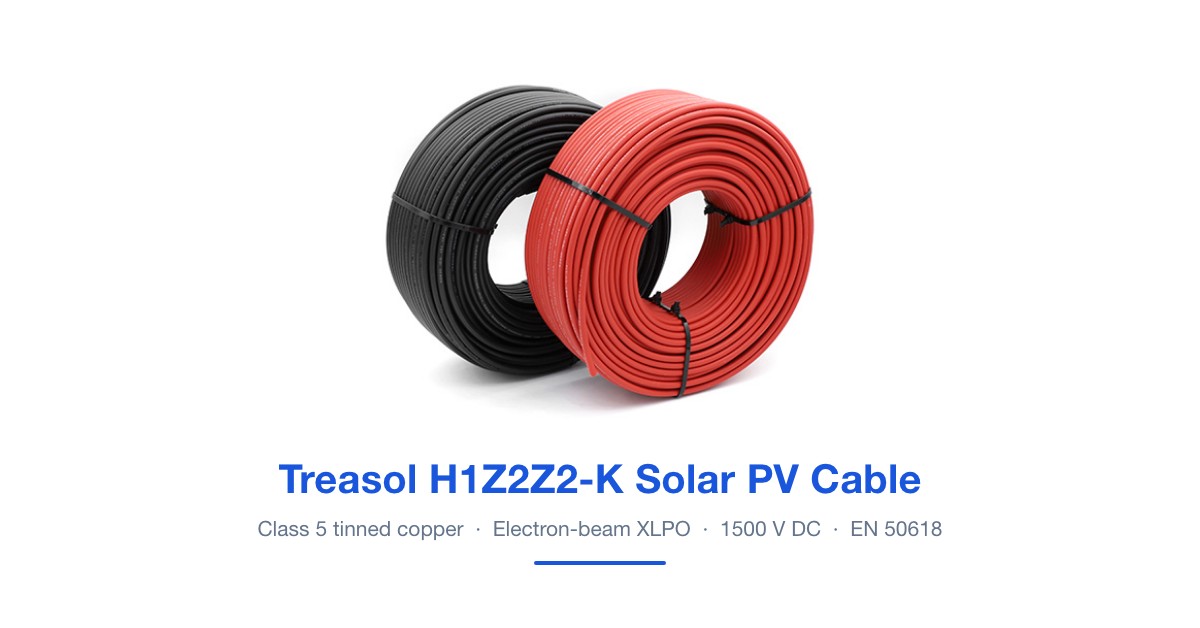
How to select solar PV cable: why H1Z2Z2-K (EN 50618 / IEC 62930) XLPO cable is …
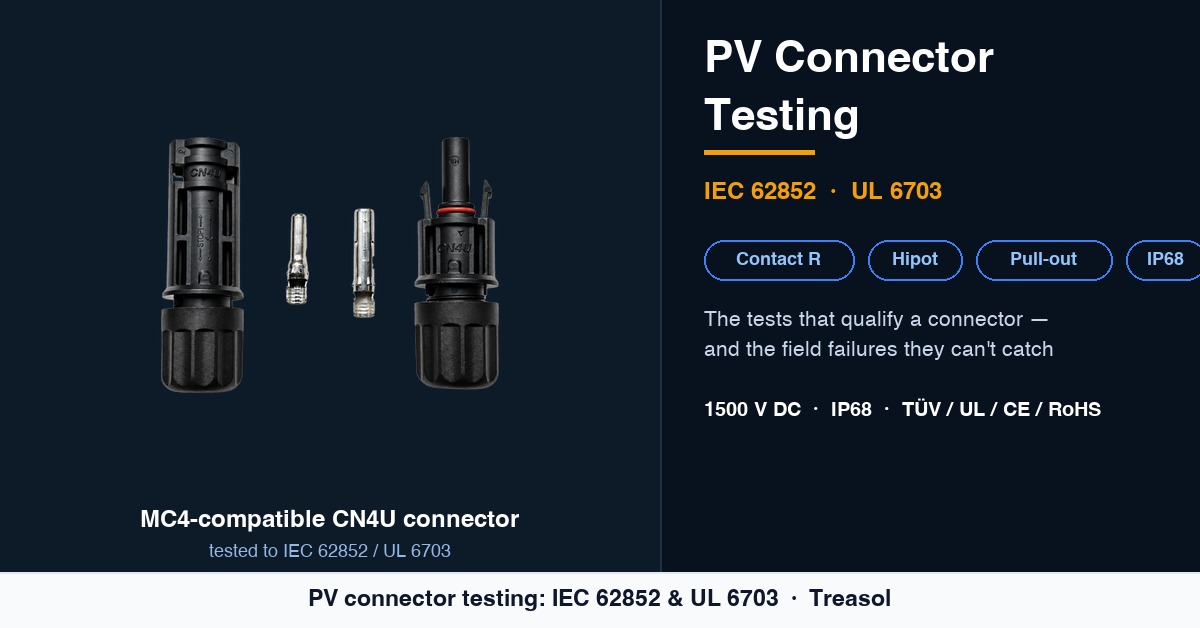
How PV connectors are qualified under IEC 62852 and UL 6703, the acceptance crit…
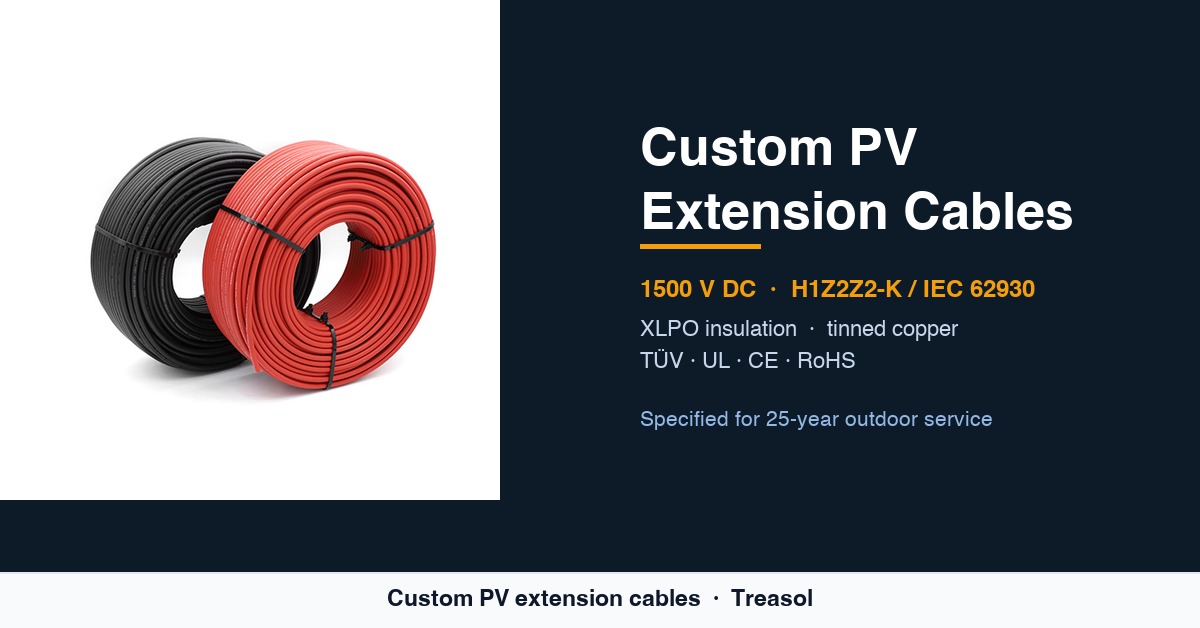
How to specify custom PV extension cables: 1500 V DC rating, XLPO insulation per…
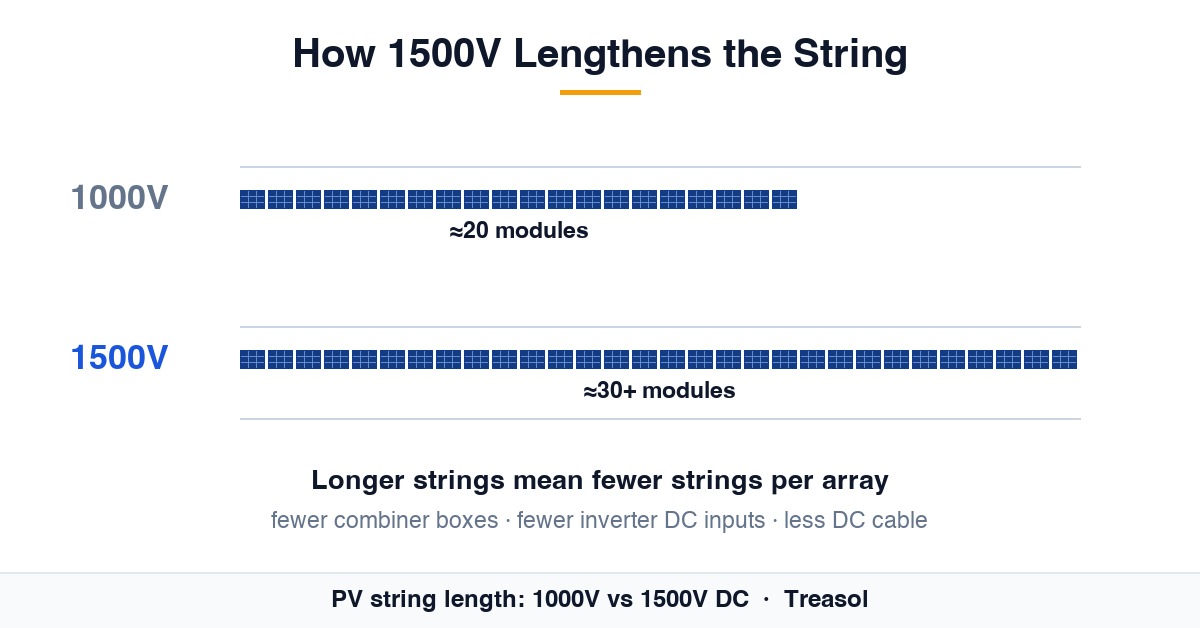
Technical comparison of 1500 V and 1000 V PV connectors: where BOS savings come …
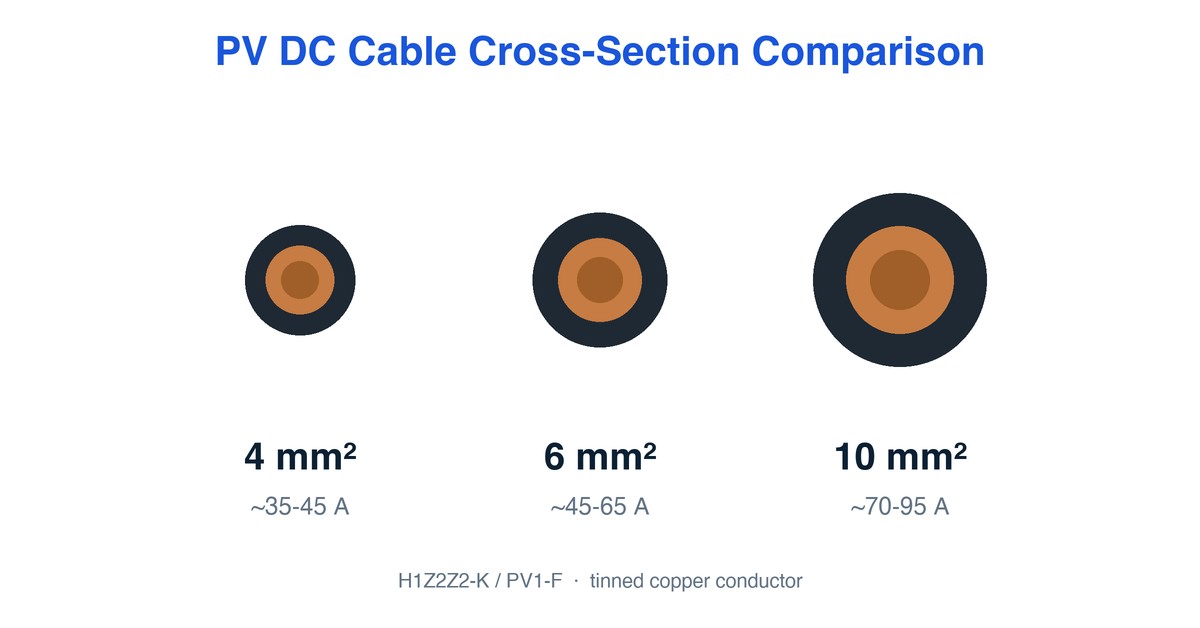
A practical guide to sizing 4mm², 6mm² and 10mm² photovoltaic DC cables by curre…
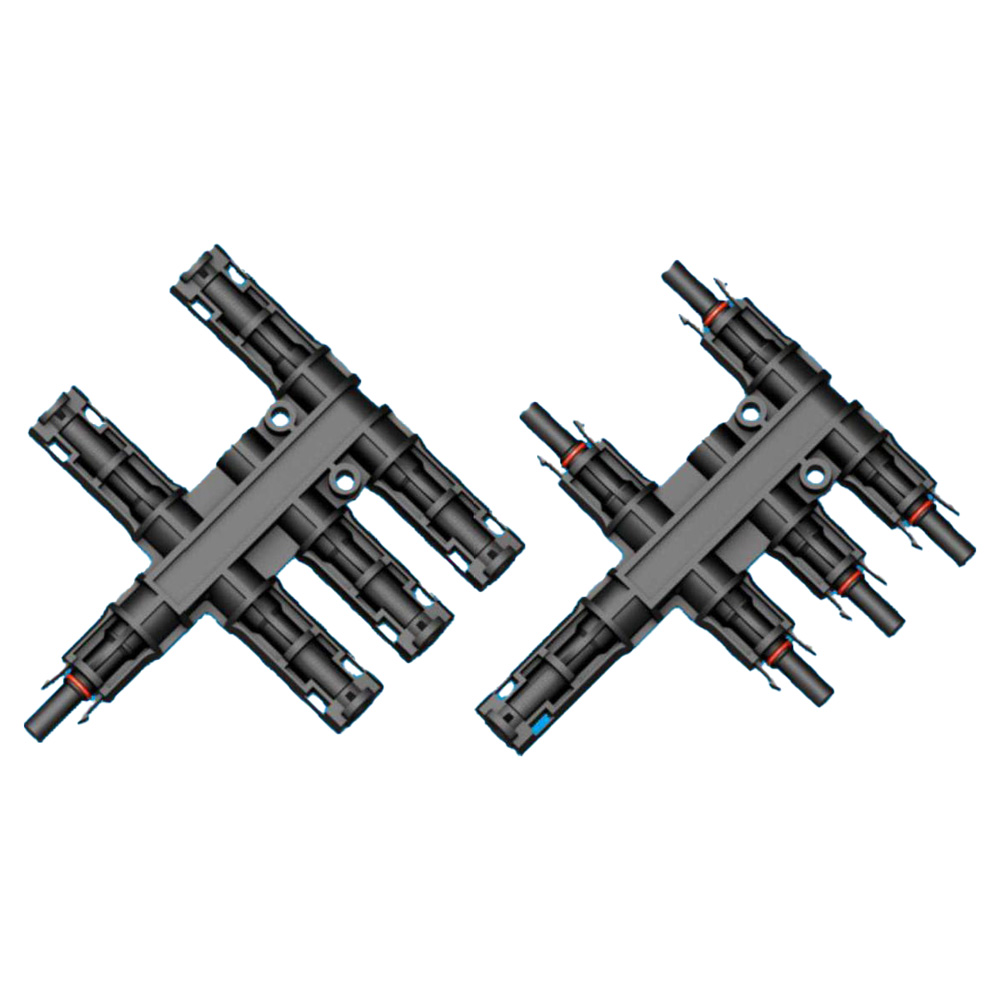
Learn the types of solar PV connectors, including panel, cable, branch, fuse and…