
PV Connector and Solar Cable Standards: The Reference Hub
One page for every standard that touches a photovoltaic DC connection: the connector product standards, the cable standards, the installation codes that govern how the two may be joined, and the difference between being certified and merely being tested.
Standards are cited for orientation. Editions are revised and national adoption varies — always confirm the edition in force in the relevant jurisdiction and the edition named in your project specification.
Who this hub is for
- EPC contractors writing a technical specification
- Design engineers choosing a connector and cable pair
- Procurement teams checking that a quoted claim is verifiable
- O&M teams assessing an installation they did not build
Each standard below is described by what it covers and, just as importantly, what it does not.
How to read this page
There are three separate questions in a PV connection, and they are governed by three different kinds of document. A product standard (IEC 62852, UL 6703, EN 50618, IEC 62930) says what a connector or cable must withstand. An installation standard (IEC 62548-1, IEC 60364-7-712, NEC 690) says how the product may be selected and combined on site. A certification is the third-party evidence that the first was actually met.
Confusing these three is the root of most PV connector compliance disputes. A connector certified to IEC 62852 satisfies the product standard; it does not follow that the installation standard permits it to be mated with a different manufacturer's connector. The cross-mating and intermateability guide covers that question in full.
Standards map by product category
What applies to what — and where the boundary of each document sits.
| Category | Standard | Region | Covers |
|---|---|---|---|
| PV DC connector | IEC 62852 | International | Safety requirements and tests for connectors in PV DC circuits. The reference product standard worldwide. |
| PV DC connector | EN 62852 (formerly EN 50521) | Europe | The European adoption of IEC 62852. EN 50521 is the superseded predecessor. |
| PV DC connector | UL 6703 | North America | Connectors for use in photovoltaic systems, recognized under the National Electrical Code. |
| PV DC connector | TÜV 2 PfG 2740 | Europe / global | A TÜV Rheinland component specification applied to PV connectors. |
| Solar DC cable | EN 50618 | Europe | Electric cables for photovoltaic systems. Source of the H1Z2Z2-K designation. |
| Solar DC cable | IEC 62930 | International | The international counterpart to EN 50618 for photovoltaic system cable. |
| Solar DC cable | TÜV 2 PfG 1169 | Europe / global | TÜV Rheinland specification associated with the PV1-F cable designation. |
| PV wire | UL 4703 | North America | Photovoltaic wire for the U.S. and Canadian markets. |
| Conductor | IEC 60228 | International | Classes of insulated cable conductors — PV cable conductors are typically class 5 flexible. |
| Installation | IEC 62548-1 | International | Design requirements for photovoltaic arrays, including requirements on mated connectors. |
| Installation | IEC 60364-7-712 | International | Low-voltage electrical installations — photovoltaic power supply systems. |
| Installation | NEC Article 690 (NFPA 70) | United States | Solar photovoltaic systems, including connector interconnection at 690.33(C). |
| Enclosure | IEC 60529 | International | Degrees of protection by enclosure — the source of IP65, IP67 and IP68. |
| In development | IEC 63678 | International | Standardised plug and socket design for DC PV systems. Not yet published as a design basis. |
Connector standards
The documents that qualify a PV DC connector as a product. The models they apply to are in the solar PV connector range.
IEC 62852 — the international connector standard
IEC 62852 sets out safety requirements and tests for connectors used in the DC circuits of photovoltaic systems, within the voltage and current ranges and the scope the standard defines — broadly, PV connectors for DC circuits up to 1500 V DC with rated currents up to 125 A per contact. It is the reference against which most of the world's PV connectors are qualified, and it is the standard most frequently cited in Treasol's certification documentation.
What it does not do: it is a product standard. Testing is performed on the connector as a product. Certification of one connector does not extend to any combination of that connector with a connector from another manufacturer. This is the single most common misunderstanding behind the phrase “MC4 compatible”.
EN 50521 / EN 62852 — the European designation
EN 50521 was the European standard for connectors for photovoltaic systems. It has been superseded by EN 62852, the European adoption of IEC 62852. Treasol's certification documentation cites IEC 62852 / EN 50521 for its PV connector scope; where a European project names a specific standard and edition, that edition governs the purchase.
This matters more than it appears. A specification written years ago may still name EN 50521, and a supplier quoting “IEC 62852” may be technically correct while not matching the document the project actually references. Confirm the edition.
UL 6703 — the North American connector standard
UL 6703 is the Standard for Connectors for Use in Photovoltaic Systems and is the North American counterpart to IEC 62852, recognized for the United States and Canada under the National Electrical Code. It addresses the voltage classes used in North American PV practice. UL certification is issued against UL's own ANSI-accredited standards, so a UL listing is not simply a re-badged IEC certificate.
In North America the installation requirement sits separately, in NEC Article 690. See the installation section below.
TÜV 2 PfG 2740 — a TÜV Rheinland component specification
2 PfG documents are TÜV Rheinland's own specifications, used where a product type is not fully covered by an existing harmonised standard or where a manufacturer seeks assessment against a defined set of requirements. 2 PfG 2740 relates to photovoltaic connectors.
Treasol cites this specification for orientation only. We do not claim that it defines the applicable scope of any specific Treasol model, and any project that intends to rely on it should confirm the requirement directly with TÜV Rheinland and with the supplier.
What qualification testing actually measures
Typical parameters and acceptance criteria used when a PV connector is qualified. Exact values come from the standard edition and the product specification.
| Test | Typical acceptance criterion | Why it matters in the field |
|---|---|---|
| Contact resistance | Below 0.5 mΩ, measured by the four-wire Kelvin method | The main source of heat at the joint. Power dissipated follows P = I²R. |
| Insulation resistance | Typically ≥100 MΩ at 500 V DC | Detects insulation defects that would otherwise become leakage or tracking paths. |
| Dielectric withstand | Typically 2 × system voltage + 1000 V AC for 1 minute (about 4000 V AC for a 1500 V DC system) | Confirms the housing and insulation withstand transient overvoltage. |
| Insertion / extraction force | Order of 20–80 N | Too low and the joint does not seat; too high and installers cannot mate it correctly by hand. |
| Cable retention (pull force) | Commonly ≥100 N, with many specifications requiring 200 N or more | Guards against pull-out from cable weight, wind movement and thermal cycling. |
| Mating durability | Repeated mating and unmating cycles | Covers the rework an installation sees over its service life. |
| Damp heat | Typically 85 °C / 85 % relative humidity for around 1000 hours | Accelerates the corrosion and seal degradation that a 25-year outdoor life produces. |
| Thermal shock and temperature cycling | Alternating high and low temperature extremes | Tests the interface where two materials with different expansion rates are pressed together. |
| Salt mist / corrosion | Salt mist exposure per the applicable method | Coastal and offshore installations. |
| Ammonia corrosion | Per IEC 62716 | Agricultural and livestock-adjacent installations, where ammonia accelerates copper corrosion. |
| Flammability | Glow-wire test at 850 °C (IEC 60695-2-11); UL 94 V-0 material rating | Limits ignition and flame spread from an overheated joint. |
The acceptance criteria above are indicative figures that appear across PV connector specifications; they are not a substitute for the standard itself. Our article on PV connector testing works through the test taxonomy and, importantly, the field failures that type tests cannot catch.
Ingress protection: IP65, IP67 and IP68
The IP code comes from IEC 60529. PV installations routinely mix all three ratings across different product families, which is a common source of specification error.
Dust-tight, water jets
Protected against dust ingress and against water projected by a nozzle. Suitable indoors, inside an enclosure, or in a sheltered position. Not intended for immersion.
Dust-tight, temporary immersion
Protected against dust and against the effects of temporary immersion in water under defined conditions of time and pressure. The lower of the two immersion ratings.
Dust-tight, continuous immersion
Dust-tight and protected against continuous immersion in water beyond 1 m, under the conditions agreed between manufacturer and user. The highest of the three.
An IP rating applies to the product in the configuration it was tested in. For a connector, that means the mated state with the correct cable cross-section and correct assembly. A connector that is correctly sealed in its intended pairing has not necessarily preserved that rating when mated with a differently dimensioned housing.
Ingress rating by Treasol product family
| Rating | Product families |
|---|---|
| IP68 | CN4U-C cable connector, CN4U-P panel connector, Branch Connector Series-2, D4A diode connector, F4C-200-1085 / F4C-201-1085 / F4C-212-1038 fuse connectors, HTX series wiring harnesses, JT3-abcd junction box |
| IP67 | Branch Connector Series-1, D4B diode connector, 3-Core AC Cable Assembly |
| IP65 | JB2 junction box, JT3 junction box |
Ratings are stated per model as published in the current Treasol product specification. Confirm the rating for the exact model and configuration quoted, since it is a property of the assembly and not of the brand.
Cable standards
The connector is only half the circuit. PV DC cable has its own standards, and the two must be specified together.
EN 50618 — H1Z2Z2-K
EN 50618 is the European standard for electric cables for photovoltaic systems, and it is the source of the H1Z2Z2-K designation. The designation is not a marketing name; each element carries meaning. H indicates a harmonised, rated-temperature 90 °C cable; 1 is the 1.0 kV AC rated voltage class; Z2 denotes cross-linked, halogen-free insulation; Z2 again denotes cross-linked, halogen-free sheath; and K indicates a flexible conductor for fixed installation.
The cable must resist UV, ozone, weather and the temperature cycling of an outdoor DC circuit for the life of the plant. Halogen-free performance is covered by EN 60754-1 / -2, ozone resistance by EN 60811-2-1, and flame retardance by EN 60332-1-2. Conductors are typically tinned copper, class 5 per IEC 60228, because tinning protects the copper from corrosion at the connection.
IEC 62930 — the international counterpart
IEC 62930 covers the same class of cable as EN 50618 but at international level. In practice the two are used interchangeably in specifications for cross-linked, halogen-free solar DC cable with a 1.5 kV DC rating, and a supplier will normally state which one the cable is made to.
TÜV 2 PfG 1169 — PV1-F
PV1-F is associated with the TÜV Rheinland specification 2 PfG 1169. PV1-F and H1Z2Z2-K describe comparable cross-linked, halogen-free photovoltaic cable, and Treasol supplies both designations in 2.5 to 16 mm².
UL 4703 — PV wire, North America
UL 4703 is the North American standard for photovoltaic wire, and it is what a U.S. or Canadian installation references where European specifications would name EN 50618. The two are not automatically interchangeable in a specification: the conductor stranding, insulation thickness and marking requirements come from the standard the project names.
Published H1Z2Z2-K conductor data
Reproduced from the Treasol solar PV cable specification. Standard stocked cross-sections for connector termination are 2.5, 4, 6, 10 and 16 mm².
| Designation | Conductor (strands × Ø) | Conductor dia. | Overall dia. | DC resistance | Voltage | Current |
|---|---|---|---|---|---|---|
| PV-1×1.5 | 30 × Ø0.25 mm | 1.58 mm | 5.20 mm | 13.70 Ω/km | 1000 / 1500 V | 20 A |
| PV-1×2.5 | 49 × Ø0.25 mm | 2.05 mm | 5.40 mm | 8.21 Ω/km | 1000 / 1500 V | 30 A |
| PV-1×4.0 | 56 × Ø0.30 mm | 2.59 mm | 6.20 mm | 5.09 Ω/km | 1000 / 1500 V | 50 A |
| PV-1×6.0 | 84 × Ø0.30 mm | 3.42 mm | 7.00 mm | 3.39 Ω/km | 1000 / 1500 V | 70 A |
| PV-1×10 | 84 × Ø0.40 mm | 4.56 mm | 9.00 mm | 1.95 Ω/km | 1000 / 1500 V | 95 A |
| PV-1×16 | 128 × Ø0.40 mm | 5.60 mm | 10.30 mm | 1.24 Ω/km | 1000 / 1500 V | 105 A |
| PV-1×25 | 192 × Ø0.40 mm | 7.25 mm | 12.20 mm | 0.80 Ω/km | 1000 / 1500 V | 140 A |
| PV-1×35 | 276 × Ø0.40 mm | 8.74 mm | 13.80 mm | 0.57 Ω/km | 1000 / 1500 V | 170 A |
Ampacity figures are free-air reference values and must be adjusted for installation conditions, grouping and ambient temperature. Conductor size selection should start from the string short-circuit current with the safety factor the applicable standard requires, then check voltage drop over the actual run length. See the PV DC cable size guide.
Installation codes: where mating is actually governed
This is the layer most often overlooked. Product certification tells you what a connector can do; the installation standard tells you whether you are allowed to put it there.
IEC 62548-1
IEC 62548-1 gives design requirements for photovoltaic arrays. Earlier editions of this standard required that plugs and socket connectors mated together in a PV system be of the same type and from the same manufacturer. Newer editions, including IEC 62548-1:2023 and its Amendment 1, should be checked for the current wording in the edition that applies to your project.
IEC 60364-7-712
IEC 60364-7-712 covers low-voltage electrical installations with respect to photovoltaic power supply systems. The 2017 edition used the same same-type, same-manufacturer wording for mated connectors, and newer editions have since been issued. National adoption of IEC 60364 varies considerably, so the applicable national wiring rules may add to or modify what the IEC text says.
NEC Article 690 — United States
Article 690 of NFPA 70 governs solar photovoltaic systems in the United States. The provisions most relevant to a connector decision are:
- 690.33(C) — mated connectors must be of the same type from the same manufacturer, or specifically listed and identified as intermateable. The compliance evidence is the listing or the intermateability documentation, not the fact that two parts fit together.
- 690.8(D) — conductor and overcurrent sizing for PV source and output circuits.
- 690.31(B) — PV wire and cable routing requirements.
- 690.35 — requirements that apply where the system voltage is raised, including 1500 V configurations.
Grounding requirements sit principally in Article 250. As with the IEC standards, the edition of the code adopted by the relevant authority having jurisdiction is what governs, not necessarily the most recent published edition.
The practical takeaway: in the IEC world, equipment standards have historically required mated connectors to come from one manufacturer and be of one type; in the U.S., the NEC states the same requirement explicitly and allows an exception only where the exact combination is listed and identified as intermateable. Either way, the burden of proof sits with the mating documentation — not with a voltage rating. The full assessment procedure is in the cross-mating guide.
In development: IEC 63678
Work has been under way since 2023 on IEC 63678, addressing a standardised plug and socket design for DC photovoltaic systems. The intent is a defined interface rather than a de facto one.
If it is published as a design basis, it would change the practical meaning of interchangeability: where an interface is standardised and the standard is invoked by a project, conformance becomes a property that can be declared and verified rather than negotiated between suppliers. Until then, the position in this hub stands — compatibility between different manufacturers' connectors rests on specific, documented, pair-level evidence.
Treasol follows this work but does not make product claims based on an unpublished standard, and we recommend the same caution to specifiers. A requirement cannot be written against a document that does not yet exist.
Certified to, compliant with, tested to
Three phrases that appear side by side in PV datasheets and mean three different things. Reading them correctly is the fastest way to qualify a supplier.
| Claim | What it means | Evidence to ask for | Strength |
|---|---|---|---|
| Certified to IEC 62852 / UL 6703 | A competent third-party body has assessed the product against a named standard and issued a certificate. | The certificate itself: issuing body, certificate number, the standard and edition, the product models covered, and the validity date. | Strongest |
| Compliant with / conforms to | The manufacturer declares conformity, for example a CE Declaration of Conformity or a RoHS statement. Self-declaration is the normal mechanism for some European obligations. | The signed declaration, naming the product, the directive or regulation, and the standards applied. | Strong, where self-declaration is the required mechanism |
| Tested to / complies with the requirements of | Test results exist against a standard or an internal specification, but no certificate has been issued. The test may be in-house. | The test report, the laboratory that produced it, the date, and whether the laboratory is accredited. | Weaker — evidence of testing, not of certification |
| “Meets international standards” | Unspecified. No standard is named, so nothing specific is claimed. | The name of the standard and edition, then the evidence for the first three rows. | Not verifiable |
An honest statement about scope
Certification is not a property of a brand. It is a property of a specific product model in a specific configuration, assessed against a specific standard. Not every Treasol product model or configuration carries the same certification.
Depending on the model and configuration, the documentation available may include TÜV Rheinland or UL certification, a CE Declaration of Conformity and RoHS compliance documentation. Before ordering, confirm the exact product model, electrical rating, cable range, certificate number and applicable certification scope. We would rather answer that question before the order than after it.
Which standard applies where
A quick orientation for three market groups. The project specification always overrides this table.
| Market | Connector | Cable | Installation |
|---|---|---|---|
| European Union | IEC 62852 / EN 62852; EN 50521 where an older specification is still in use | EN 50618 (H1Z2Z2-K); TÜV 2 PfG 1169 (PV1-F) | IEC 62548-1 and IEC 60364-7-712 as adopted in national wiring rules |
| North America (US and Canada) |
UL 6703 | UL 4703 photovoltaic wire | NEC Article 690 (NFPA 70), enforced by the authority having jurisdiction |
| Latin America, Middle East, Africa, Asia-Pacific |
IEC 62852 is the usual reference; some markets adopt portions of the North American framework | IEC 62930 or EN 50618 | National electrical regulations plus IEC 62548-1 and IEC 60364-7-712 where adopted |
Many projects carry requirements from more than one framework: a utility-scale plant financed internationally may reference IEC standards for equipment and a locally enforced code for installation. Confirm which document the owner, the lender's technical adviser and the authority having jurisdiction will each apply.
Treasol certification status
Stated per product family, with the scope limits made explicit. Certificate numbers are provided on request and can be verified with the issuing body. Company and quality-system information is on our about page.
| Product family | Certification as documented | Scope limit |
|---|---|---|
| CN4U-C solar cable connector View model → |
TÜV certification for PV cable connectors, assessed to IEC 62852 / EN 50521 as applicable. Rated 1500 V DC, 70 A maximum, IP68. | Applies to the model as specified. Does not extend to mating with another manufacturer's connector. |
| CN4U-P solar panel connector View model → |
TÜV certification for PV panel connectors, assessed to IEC 62852 / EN 50521 as applicable. Rated 1500 V DC, 52 A maximum, IP68. | Applies to the model as specified. Does not extend to mating with another manufacturer's connector. |
| F4C fuse connector family F4C-200-1085 → |
TÜV certification for solar fuse connectors, and UL listing under file E364333, category Fuseholders, Photovoltaic. Rated 1–30 A; 1500 V for F4C-200-1085 and F4C-201-1085; 1000 / 1100 V TÜV and 600 V UL for F4C-212-1038. | The UL listing covers the fuse-holder category for these models. It is not a statement of cross-brand mating compatibility. |
| PV diode, branch and junction box products Browse range → |
Banner certification claims apply per model: TÜV Rheinland, UL, CE and RoHS as documented for the specific model and configuration. | Product-specific. Confirm the certification that applies to the model you are ordering before quotation. |
| Solar PV cable (H1Z2Z2-K) View cable → |
Cable to EN 50618 (H1Z2Z2-K). PV1-F to TÜV 2 PfG 1169 also available. Tinned copper class 5 conductors per IEC 60228, halogen free to EN 60754-1 / -2, flame retardant to EN 60332-1-2. | Cable standard compliance is separate from connector certification. Specify both. |
| Wiring harness assemblies View harnesses → |
Cable to EN 50618 (H1Z2Z2-K) or TÜV 2 PfG 1169 (PV1-F); connectors assessed to IEC 62852 and UL 6703. Pre-shipment continuity, insulation resistance and pull-force testing with records available on request. | Certification covers the components. The assembly as built to a project drawing is warranted to that drawing. |
TÜV certification numbers and the corresponding certificate documents are supplied with the quotation documentation for the model concerned, so they can be checked directly against the TÜV Rheinland public database. UL file E364333 for the F4C fuse connector family is verifiable in the UL Product iQ database.
Products referenced in this hub
Model-specific ratings. Applicable certification and documentation are confirmed per model before quotation.
Last updated: October 2026

CN4U-C Solar Cable Connector
| Standard | IEC 62852 |
| Voltage | 1500 V DC |
| Protection | IP68 |
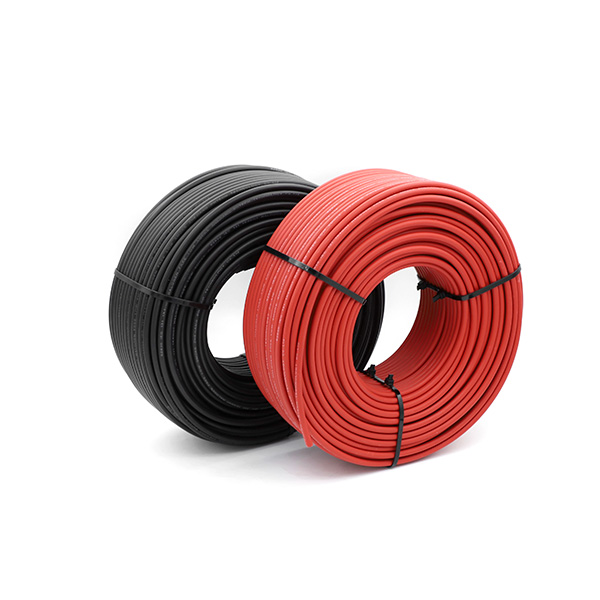
H1Z2Z2-K Solar PV Cable
| Standard | EN 50618 |
| Voltage | 1.5 kV DC |
| Cross-section | 2.5–16 mm² |

F4C-200-1085 Fuse Connector
| UL file | E364333 |
| Voltage | 1500 V |
| Protection | IP68 |
Further reading
Deeper treatment of individual standards and selection decisions.
PV Connector Cross-Mating & Intermateability
The mating question in full: what compatibility means, the decision matrix, and how to assess an existing installation.
Read the guide →PV Connector Testing: What IEC 62852 Verifies
The test taxonomy, the acceptance criteria, and the field failures that type tests cannot catch.
Read the article →TÜV vs UL Certification for Solar Products
How the two certification routes differ in scope and process, and what each one tells a specifier.
Read the article →Solar Panel Cable Selection
Decoding the H1Z2Z2-K construction code and choosing the right PV cable for a project.
Read the article →PV DC Cable Size Guide
Sizing from string current, with the voltage-drop check that a current rating alone does not cover.
Read the guide →1500 V vs 1000 V PV Connectors
What changes between the two voltage classes, including the qualification test voltages.
Read the article →Frequently asked questions about PV standards
The questions specifiers and buyers ask most often. Product-specific questions are answered in our product FAQ.
Ask a Standards or Certification Question
Tell us which standard your project references and we will confirm what applies to the model you need: certification scope, certificate numbers, test evidence, cable pairing and the documentation package for your qualification process.
What you can receive:
- The standard and edition a model is assessed to
- Certificate documents and numbers for verification
- Datasheet with electrical and mechanical ratings
- Cable pairing recommendation
- MOQ, lead time and OEM options
Contact the PV connector team
Send us the information above and our engineering team will come back with the recommended Treasol model, the applicable configuration and the documentation your project requires. We normally respond within 24 hours.
Email: info@treasol.com
WhatsApp: +86 186 8861 9157
Contact us → Chat on WhatsApp