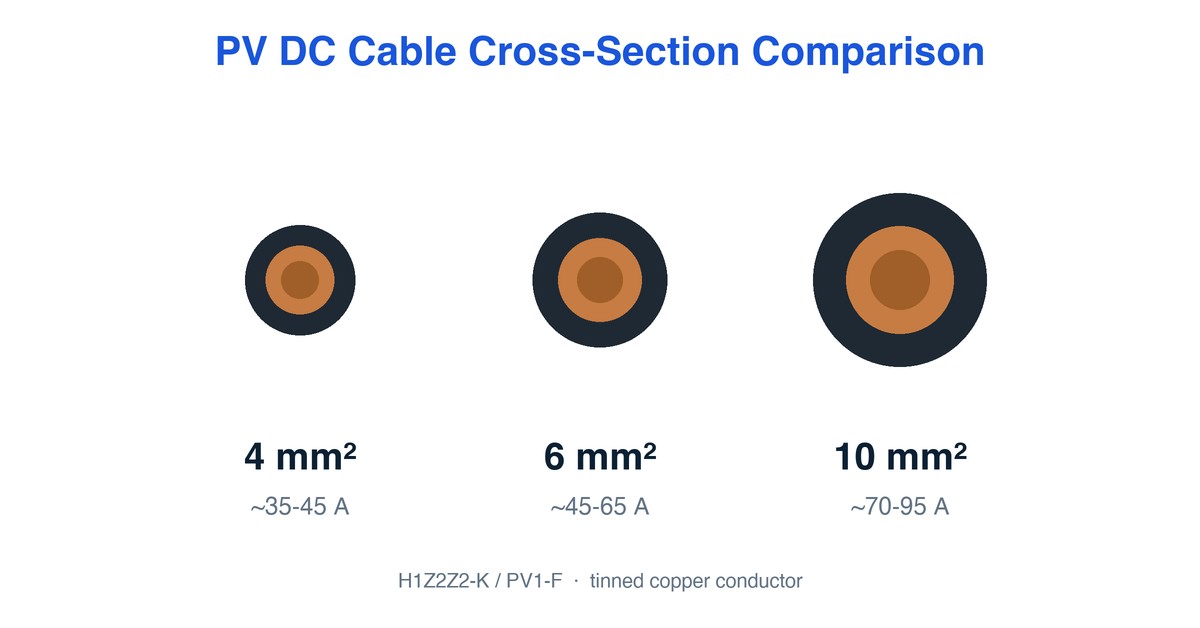
Cable sizing is where a lot of solar design mistakes start. Pick a cross-section that is too small and the conductor runs hot under load while voltage drop eats into the yield. Pick one that is far larger than needed and you are paying for copper that does nothing. Almost every residential, commercial and utility project lands on one of three sizes: 4 mm², 6 mm², or 10 mm².
An undersized cable does two kinds of damage. Heat ages the insulation and stresses the connectors, which is the fire risk. Resistance shows up as voltage drop, so the inverter receives less than the array produces. Both failures are invisible on commissioning day and expensive to correct after handover.
1. The Two Variables That Decide Cable Size
Two numbers drive the choice: how much current the strings carry, and how far that current has to travel.
Current comes from the modules and is fixed once the array is defined. Distance is the one-way run from the array to the combiner box, charge controller or inverter. As either number grows, the conductor has to grow with it.
2. Quick Selection by Size
Figures below assume tinned-copper PV wire to H1Z2Z2-K / PV1-F, run in open air at moderate ambient temperature. Bundled runs, conduit and hot roofs all cut the usable current, so derating applies (see section 5).
4 mm² PV DC Cable (≈ 12 AWG)
Roughly 35–45 A in open air. Runs stay short: past 10–15 m the voltage drop starts to bite. That is why 4 mm² lives at string level, joining panels to each other or feeding a small array into a nearby combiner box. Portable kits and cabin-scale off-grid systems use little else.
6 mm² PV DC Cable (≈ 10 AWG)
Good for about 45–65 A and runs of 15–25 m, which describes most modern home installations. When a design sits between 4 mm² and 6 mm², take the 6 mm². The price gap is small, resistance is lower, and the extra headroom absorbs a hotter roof or a future string without re-cabling.
10 mm² PV DC Cable (≈ 8 AWG)
Around 70–95 A, but the real reason to choose it is distance: past 30 m it is often the only size that keeps voltage drop acceptable. Expect it on main trunks from combiner box to inverter, on ground-mounted fields well away from the building, and wherever several strings combine before the run. It is stiffer, needs a larger bending radius and costs more per meter, so it gets specified where distance demands it rather than everywhere.
Treasol manufactures certified H1Z2Z2-K / PV1-F cable in all three sizes, with UV, ozone and flame-retardant jacketing for permanent outdoor service. View the PV cable →
3. Sizing by Voltage Drop
The size notes above are a starting point. The precise check is voltage drop: keep losses on the DC side within 1–2% of system voltage, ideally under 1%.
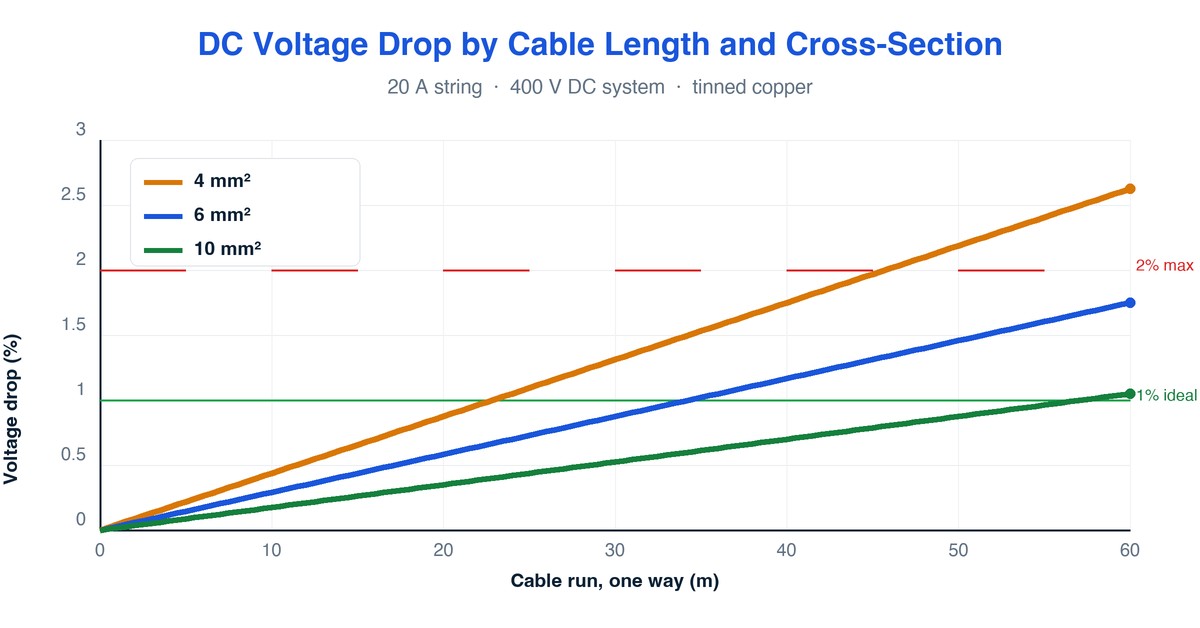
Length raises resistance and current raises heat, and both take yield the array has already paid for. The fix never changes: a larger cross-section.
Take a 20 A string. At 10 m, 4 mm² does the job. Stretch the same string to 40 m and that 4 mm² is losing a noticeable slice of the harvest even though the current has not changed; at that distance 10 mm² is the realistic choice.
The working rule: once a run passes roughly 25–30 m at any meaningful current, step up a size instead of chasing the last percent of efficiency.
4. Connectors and Compatibility
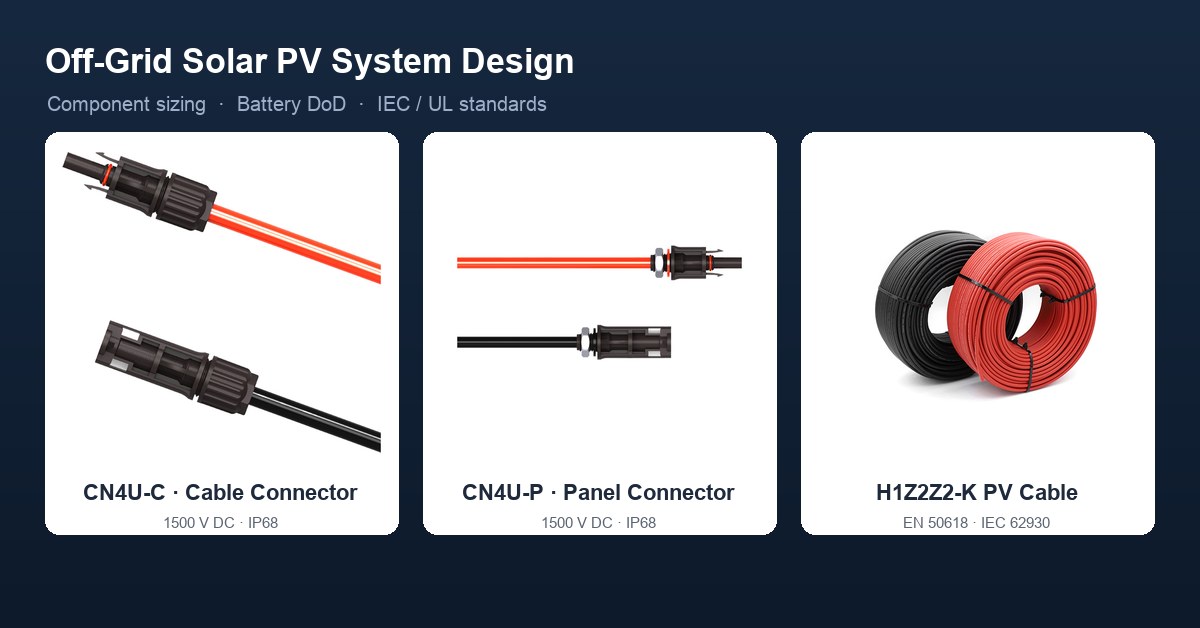
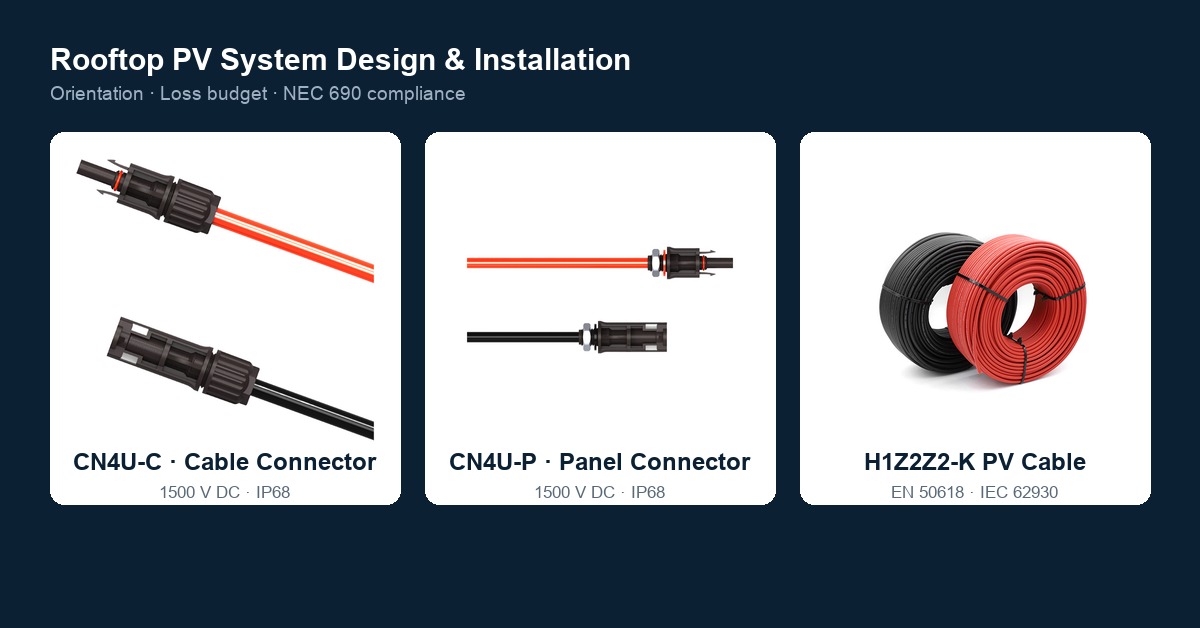
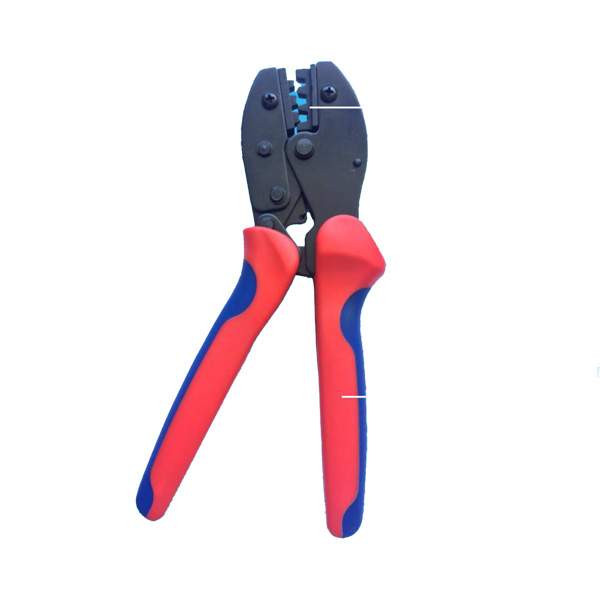
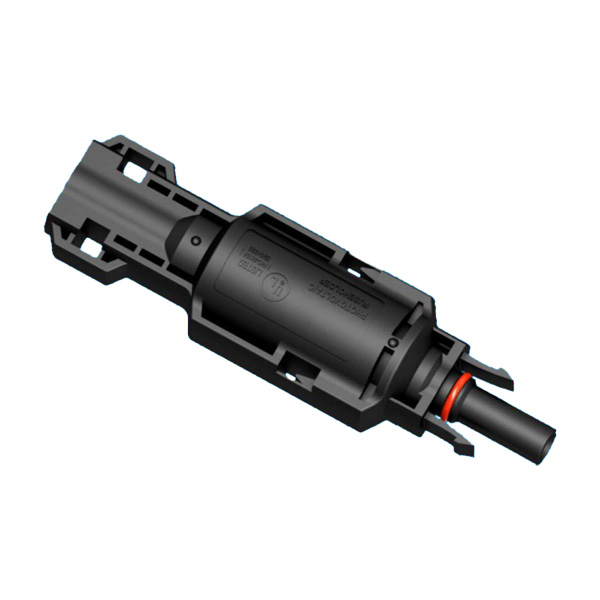
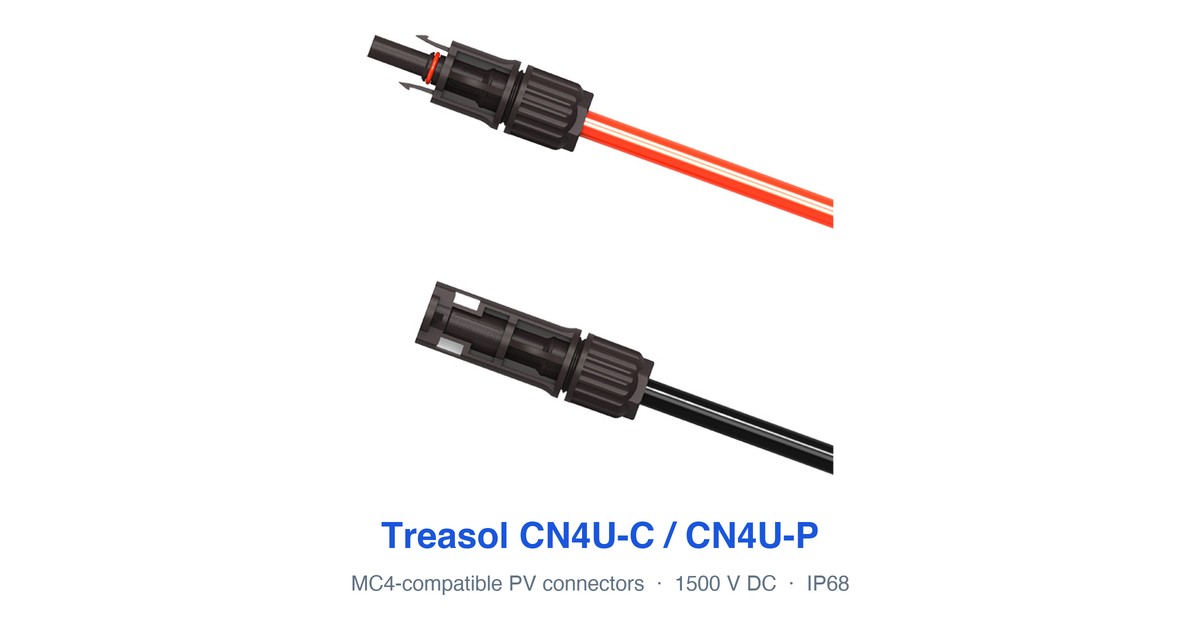
Connectors are part of the same decision. Standard MC4 contacts accept 4 mm² and 6 mm² without fuss; 10 mm² generally needs the larger contact and crimp tooling to match. Treasol's CN4U-C cable connector and CN4U-P panel connector are MC4-compatible, rated 1500 V DC and IP68, and terminate the standard PV cable sizes. For the full cross-brand picture, see the MC4-compatible solar connector guide.
Insist on cable marked H1Z2Z2-K or PV1-F. Building wire rated for indoor use goes brittle after a few seasons of UV and eventually cracks. Everything here assumes tinned copper; aluminium does not appear at these gauges in PV work.
5. Electrical Parameters That Affect Selection
Four parameters decide the final size:
- Rated current. The conductor has to carry the maximum string current indefinitely, with margin to spare.
- System voltage. PV arrays run at 600 V, 1000 V or 1500 V DC. Higher voltage means less current for the same power, but the insulation and its certification have to match the system voltage.
- Ambient temperature. Ampacity falls as temperature climbs. Rooftop and desert sites need derating on paper, not guesswork.
- Installation method. Open air cools the cable; conduit, trunking and bundled trays do not. Restricted airflow means a bigger conductor.
6. Why Cross-Section Matters
Cross-section sets the resistance of the run, and resistance is what turns generated power into heat on the way to the inverter. A larger conductor wastes less along the cable, runs cooler, and hands more of what the array produces to the inverter.
7. Comparison of 4 mm², 6 mm², and 10 mm² PV DC Cables
| Cable size | Typical current capacity* | Voltage drop | Cost level | Installation ease |
|---|---|---|---|---|
| 4 mm² | ~35–45 A | Higher | Low | Very easy |
| 6 mm² | ~45–65 A | Medium | Medium | Easy |
| 10 mm² | ~70–95 A | Low | Higher | Moderate |
* Actual ampacity depends on insulation type, installation conditions and the applicable standard.
8. Typical Applications by Cable Size
4 mm² covers short string wiring and residential rooftops with modest current. It flexes where space is tight, terminates into standard MC4 contacts easily and costs the least. What it will not do is carry distance; drop rises quickly past 15 m.
6 mm² is the workhorse of the three: medium-distance DC runs, higher-current strings, most homes and a fair share of commercial roofs. Price, drop and handling all land in the middle, which is why it outsells the other two.
10 mm² belongs on long runs and high-current trunks: combiner-to-inverter feeders, ground-mounted fields, utility plants. Voltage drop stays low and high-temperature behaviour is better. The trade is cost and handling, since the cable is stiff and needs a larger bending radius.
9. Standards and Certification
Buy against recognized standards rather than price per meter:
- IEC 62930 / EN 50618 (H1Z2Z2-K)
- TÜV PV1-F
- UL 4703
Cable certified to these standards is engineered for UV exposure, conductor temperatures of 90–120 °C and 25+ years outdoors. Treasol cable is manufactured to the same specifications and carries TÜV, UL, CE and RoHS certification. See the full cable range →
10. Common Mistakes in PV DC Cable Selection
Four mistakes account for most cable-related callbacks:
- Buying a smaller size to trim the invoice.
- Skipping temperature derating on hot roofs.
- Leaving no headroom for a later expansion.
- Running indoor-rated or uncertified cable outdoors.
The saving at purchase is small. The troubleshooting that follows is not.
11. Selection Checklist
- Read Isc off the module label and multiply by 1.25 for safety margin.
- Measure the full loop, positive length plus negative length, not just the one-way run.
- Choose the size:
- Short runs at low current → 4 mm²
- Standard residential or commercial runs → 6 mm² (the safe default)
- Long runs, high current or a main trunk → 10 mm²
12. Frequently Asked Questions
What size PV DC cable do I need for a residential solar system?
For most homes, 6 mm². It covers panel-to-inverter runs up to about 25 m without excessive loss. Keep 4 mm² for short string links under roughly 15 m, and use 10 mm² for long runs or the main trunk from a combiner box.
Can I use 4 mm² instead of 6 mm² to save cost?
On short, low-current runs, yes. Past 15 m or so, or on a roof that regularly runs hot, the losses catch up with you. On a typical home roof the price gap is small enough that 6 mm² is simply the better call.
What is the difference between H1Z2Z2-K and PV1-F?
They describe the same family of cable: cross-linked, halogen-free solar DC wire. H1Z2Z2-K is the current designation under EN 50618 / IEC 62930, while PV1-F is the earlier TÜV designation that many datasheets still reference. Certified cable today carries both marks.
Are Treasol PV cables compatible with standard MC4 connectors?
Yes. 4 mm² and 6 mm² seat directly into standard MC4 contacts, and 10 mm² takes the larger contact size. Treasol's CN4U-C and CN4U-P connectors are rated 1500 V DC and IP68, and terminate all three sizes.
What voltage are Treasol PV DC cables rated for?
1500 V DC, with TÜV, UL, CE and RoHS certification across the range.
How far can I run 6 mm² solar cable?
Plan on 15–25 m at typical residential currents. Beyond roughly 30 m the voltage-drop argument moves you up to 10 mm².
13. Conclusion
Size PV DC cable for the current it carries and the distance it covers, then confirm the choice with a voltage-drop check. Short residential runs take 4 mm², most projects land on 6 mm², and long or heavily loaded runs need 10 mm². When the calculation sits between two sizes, take the larger one; copper is cheaper than a callback.
For certified H1Z2Z2-K / PV1-F cable in all three sizes and MC4-compatible connectors rated to 1500 V DC, see Treasol PV cables or send us your string configuration and run lengths for a sizing check.
Published by Dongguan Treasun New Energy Technology Co., Ltd, manufacturer of MC4-compatible solar PV connectors, junction boxes and photovoltaic DC cables certified to TÜV, UL, CE and RoHS.