For the complete assessment procedure, see our PV connector cross-mating and intermateability guide.
What Are MC4 Connectors? A Practical Guide to Solar PV Connectors
Walk onto any solar installation site and you will see them — small plastic connectors linking panel to panel, string to cable, array to inverter. Those are MC4 connectors, and while they do not get much attention, a bad connection here can take down an entire string.
| Model | Type | Rated current | Rated voltage | Protection | Cable cross-section |
|---|---|---|---|---|---|
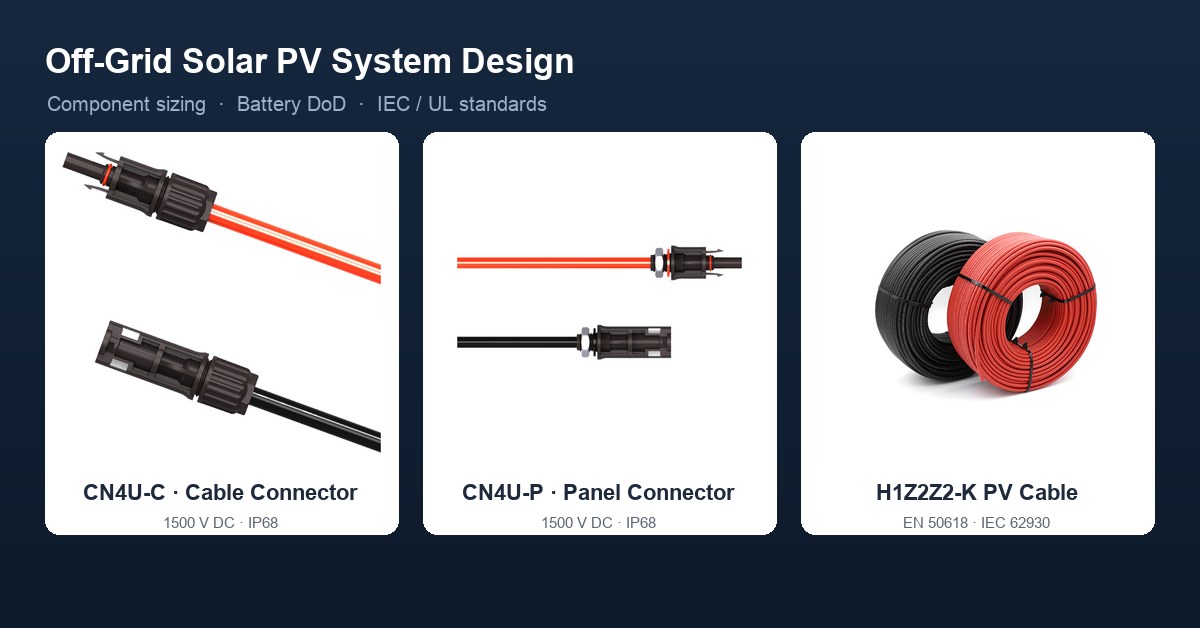
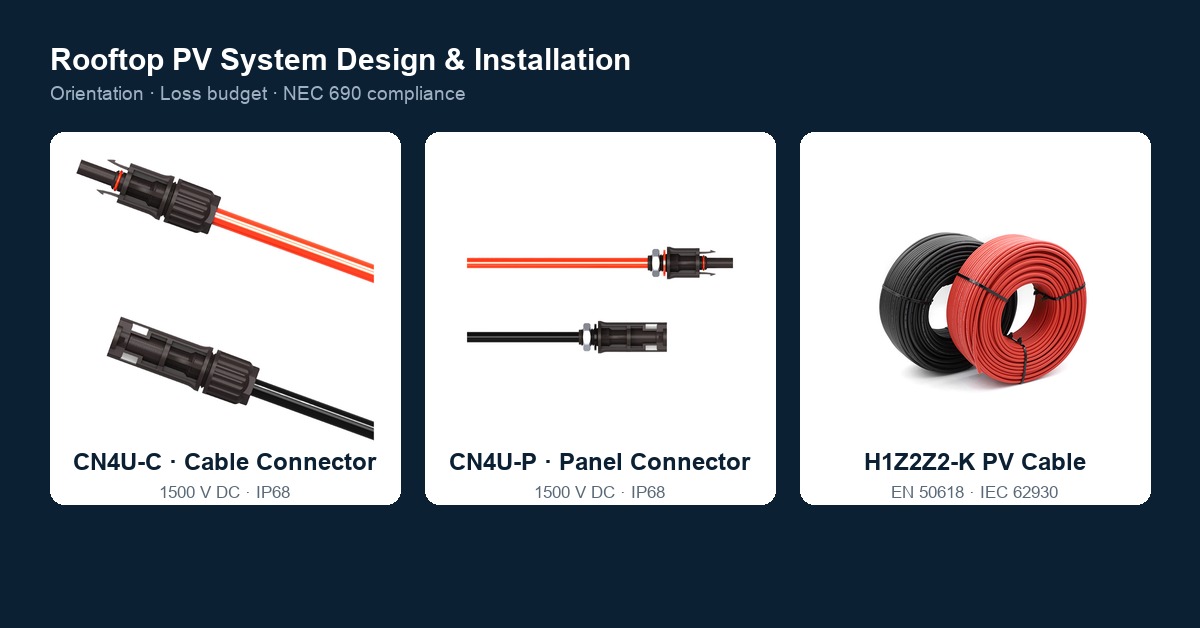
| CN4U-C | Cable connector | 70 A max | 1500 V (TÜV and UL) | IP68 | 2.5 / 4 / 6 / 10 / 16 mm² |
| CN4U-P | Panel connector | 52 A max | 1500 V (TÜV and UL) | IP68 | 2.5 / 4 / 6 mm² |
| Branch Connector Series-2 | Branch connector | 60 A max at the output | 1500 V (TÜV and UL) | IP68 | Matched to the input cable |
| F4C-200-1085 | Fuse connector | 1–30 A | 1500 V (TÜV and UL) | IP68 | 2.5 / 4 / 6 / 10 mm² |
| D4A | Diode connector | 1–8 A | 1000 V (TÜV), 600 V (UL) | IP68 | Ø4 mm pin |
| D4B | Diode connector | 30 A | 1500 V | IP67 | Ø4 mm pin |
| H1Z2Z2-K solar cable | PV cable | Sized by cross-section | 1.5 kV DC (1500 V systems) | UV and ozone resistant | 2.5 / 4 / 6 / 10 / 16 mm² |
MC4 connectors handle the job of joining solar modules and PV cables in systems ranging from a few rooftop panels to multi-megawatt ground-mounted arrays. They need to carry hundreds of volts DC, sit under direct sun for 25 years, and never loosen — all without becoming the weakest link in the system.
At Treasol, we manufacture MC4 compatible connectors that meet these demands. Here is what you need to know before specifying them for your next project.
Where the Name Comes From
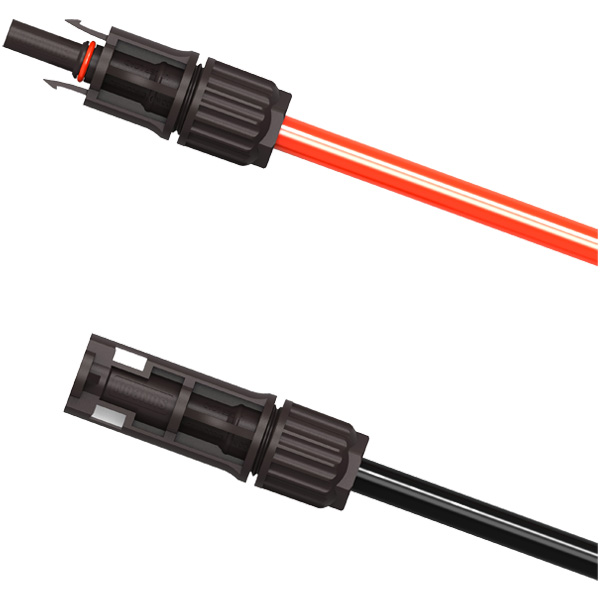
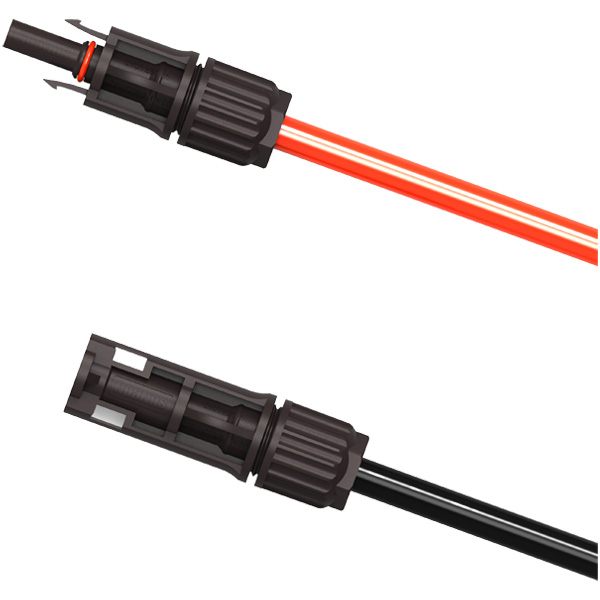
"MC4" stands for Multi-Contact, 4 mm — Multi-Contact (now Stäubli) developed the original design, and the "4" refers to the diameter of the contact pin. They replaced earlier PV connectors that were slower to install and less consistent in terms of weather sealing. The key improvements were snap-together assembly, built-in waterproofing, and a locking mechanism that holds firm even when cables get pulled.
Four Parts That Matter
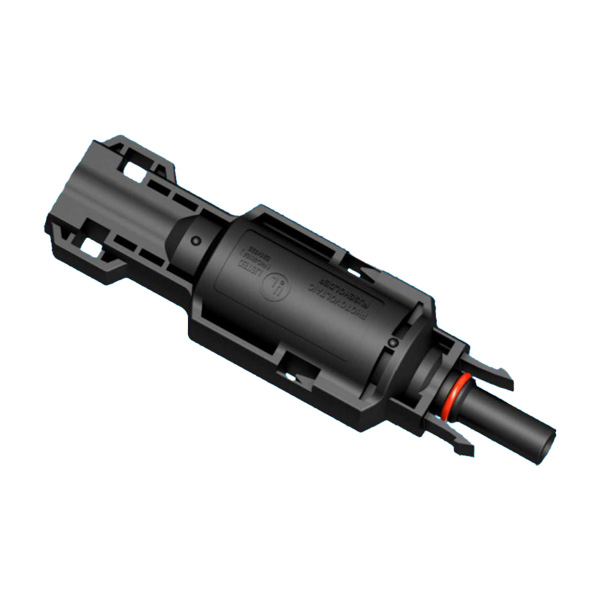
An MC4 connector is not complicated, but each piece matters:
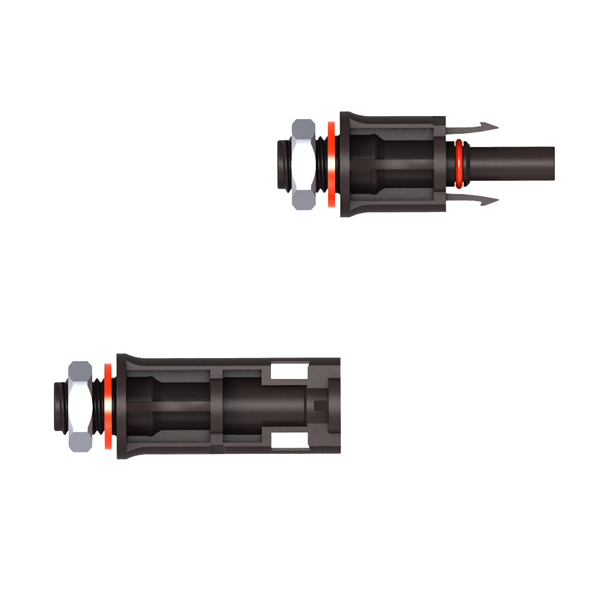
1. Housing — The outer shell takes the abuse. Good housings resist UV cracking and maintain dielectric strength across the full temperature range, typically -40 °C to +85 °C.
2. Contact pin — This is where the current flows. Copper alloy with tin or silver plating keeps contact resistance low. When resistance creeps up, so does heat, and hot connectors degrade faster.
3. Seal — The gasket or O-ring keeps water and dust out. Most quality connectors carry an IP67 or IP68 rating. IP67 handles temporary immersion; IP68 covers continuous submersion — relevant if your installation floods or sits in heavy snowmelt.
4. Locking mechanism — The snap-lock prevents accidental disconnection from cable tugging, wind vibration, or thermal expansion cycles. A connector that pops loose mid-string creates an arc hazard.
Why Installers Default to MC4
There are three practical reasons:
Fast assembly — Crimp the contact, push it into the housing, snap together. No screw terminals, no junction boxes. On a 10 kW residential install, this saves real time.
Weather handling — PV connectors live outdoors. Rain, snow, high humidity, UV — all of it. A properly sealed MC4 connector does not care.
Voltage headroom — Modern systems increasingly run at 1500 V DC to cut cable costs and reduce string count. Quality MC4 compatible connectors are rated for it, letting you design longer strings without worrying about the connection points.
Original vs Compatible — A Question Worth Asking
A common question: "Can I mix different brands of MC4 connectors?"
Technically, many manufacturers produce MC4-compatible products. Practically, not all of them play well together. Differences in contact geometry, housing tolerances, and seal material can stack up — and the result is often higher contact resistance at the mating point.
In the field, mixing brands has been traced to:
- Hot spots visible on thermal imaging
- Water ingress at the seal interface
- Premature connector failure in high-current strings
If you are mixing connectors from different suppliers, test the specific combination under load before deploying at scale. Better yet, stick with a single qualified source for all connectors on a given project.
Treasol connectors are designed and tested to work reliably when used as a system. We do not recommend mixing with untested third-party parts unless you have verified compatibility yourself.
Quick Reference: Typical Specs
Parameter Specification
Rated Voltage Up to 1500 V DC
Rated Current 30 A–40A (design-dependent)
Protection Grade IP67 / IP68
Contact Material Copper alloy, tin or silver plated
Cable Size 2.5mm², 4mm², 6mm² (10mm² available)
Operating Temperature -40 °C to +85 °C
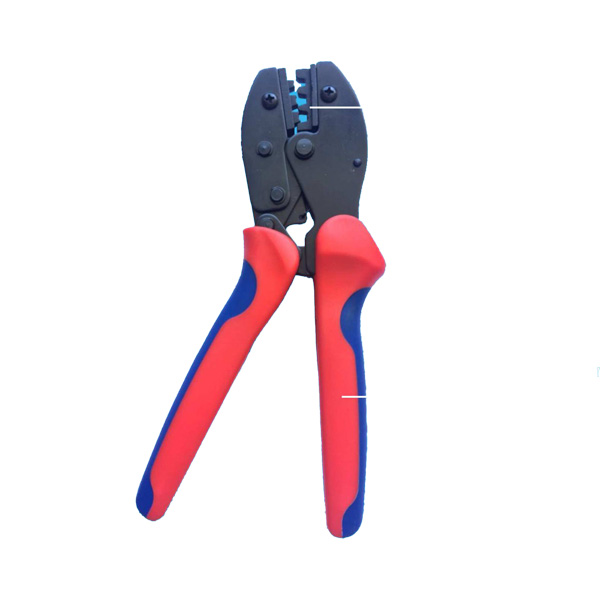
Connection Method Crimp
Cable Pairing Basics
MC4 connectors are crimped onto PV cable — typically 2.5mm² to 6mm² for most residential and commercial work. The cable itself must handle outdoor exposure: UV-stabilized jacket, flame retardant, and rated for the system voltage.
Undersizing the cable increases resistive losses and generates heat at the connector. For longer cable runs, stepping up to 6mm² or even 10mm² is worth the marginal material cost.
Safety Rules That Actually Matter
Do not disconnect under load. DC arcs do not self-extinguish like AC arcs do. Pulling an MC4 connector apart while current is flowing can sustain an arc long enough to melt the contact surface. The connector may look fine afterward, but the damage is done — resistance goes up, and the next failure is a matter of time. Always shut down the inverter and isolate the string first.
Do not mix brands without verification. This bears repeating. Even if two connectors "fit," differences in contact design can create a weak point. Field experience shows that mixed-brand connections fail at higher rates than matched pairs.
Where MC4 Connectors Are Used
- Residential rooftop — connecting panels in series strings, linking to microinverters or string inverters, battery system tie-ins
- Commercial rooftop — factory and office buildings, often 1500 V DC systems with longer strings
- Utility-scale — ground-mounted arrays where reliability at scale is non-negotiable; a connector failure here means lost revenue
- Portable and off-grid — solar generators, mobile power stations, marine and RV setups
Certifications That Back the Product
MC4 compatible connectors should carry independent test certifications. The ones that matter for global markets:
- TÜV Rheinland — widely recognized in Europe and Asia for PV component safety
- UL Listed — required for North American installations
- CE Marking — mandatory for the European market
- RoHS — restricts hazardous substances, required in the EU
Treasol connectors hold these certifications. If you need documentation for your project submission, ask our team.
Why Work with Treasol
We focus on one thing: photovoltaic connection products. That covers MC4 compatible connectors, PV cable assemblies, solar fuse connectors, diode connectors, and custom wiring harnesses.
What that means for your project:
- We build connectors daily, not as a side business. Quality control is baked into the production line.
- If your project needs a non-standard cable length, a specific connector configuration, or custom branding, we can do it.
- Our technical team can help you validate connector compatibility if you are switching suppliers or mixing components.
MC4 connectors are a small component, but they carry the full output of a solar array. That is not where you cut corners.
See our full range of MC4 compatible solar connectors:
https://www.treasol.com/product/category/solar-cable-connector