A solar PV system is only as reliable as its weakest connection. The connectors that tie together modules, inverters and cables spend decades outdoors, handling high DC voltages through heat, rain, UV and vibration — and when one fails, the whole string pays for it.
A solar PV connector is the electrical and mechanical link between photovoltaic modules, cables and other components. It is a small part compared with a panel or an inverter, but it lives outside for the life of the system. That means its job is not just to carry current, but to keep doing so under conditions that would corrode, crack or loosen an ordinary component.
So the connector type you choose is a design decision, not an afterthought.
Below we walk through the main types of PV connectors, what each one does, where it is typically used, and what to check before you spec one.
What Is a Solar PV Connector?
A solar PV connector is an electrical connector built specifically for photovoltaic applications.
The difference from an ordinary electrical connector is the environment. PV connectors sit outdoors, in a DC circuit, and are expected to hold a stable electrical connection while surviving mechanical stress and weather for the full life of the array. That is why they are built around a few core parts:
- Connector housing
- Metal contact
- Sealing component
- Locking mechanism
- Cable connection or crimping area
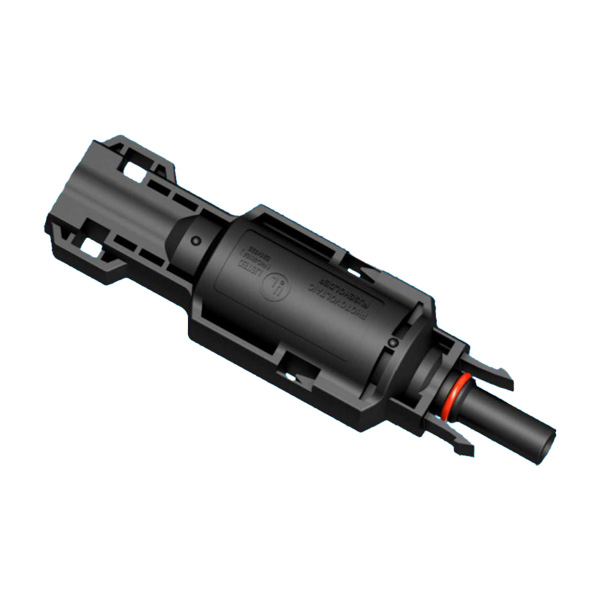
The housing provides mechanical protection; the metal contact carries the current. Sealing keeps out moisture and contaminants, and the locking mechanism stops the connection from working loose.
When you spec a connector for a solar job, the numbers that matter are voltage and current ratings, cable compatibility, contact resistance, environmental protection and the applicable certifications.
The Main Types of Solar PV Connectors
There is no single connector that fits every point in a PV system. Different jobs need different configurations.
The main types used in modern PV installations are:
- Solar panel connectors
- Solar cable connectors
- Branch connectors
- Solar fuse connectors
- PV diode connectors
- Junction boxes
- Solar wiring harness assemblies
These products do different jobs. The fact that they all appear in a photovoltaic system does not make them interchangeable.
1. Solar Panel Connectors
Solar panel connectors sit at the module level, linking the positive and negative terminals of a solar module to the PV cables running to the rest of the system.
What a panel connector has to deliver:
- Stable electrical contact
- Mechanical locking that stays put
- Sealing against the weather
- UV and weather resistance
- Voltage and current ratings that match the module
- Compatibility with the specified PV cable
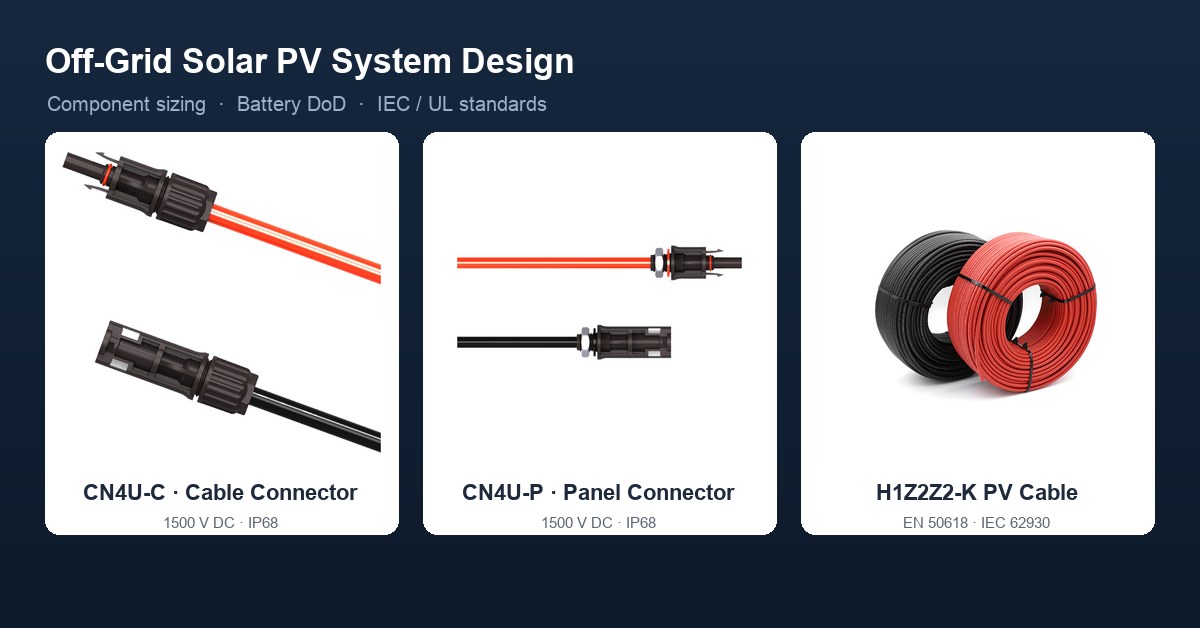
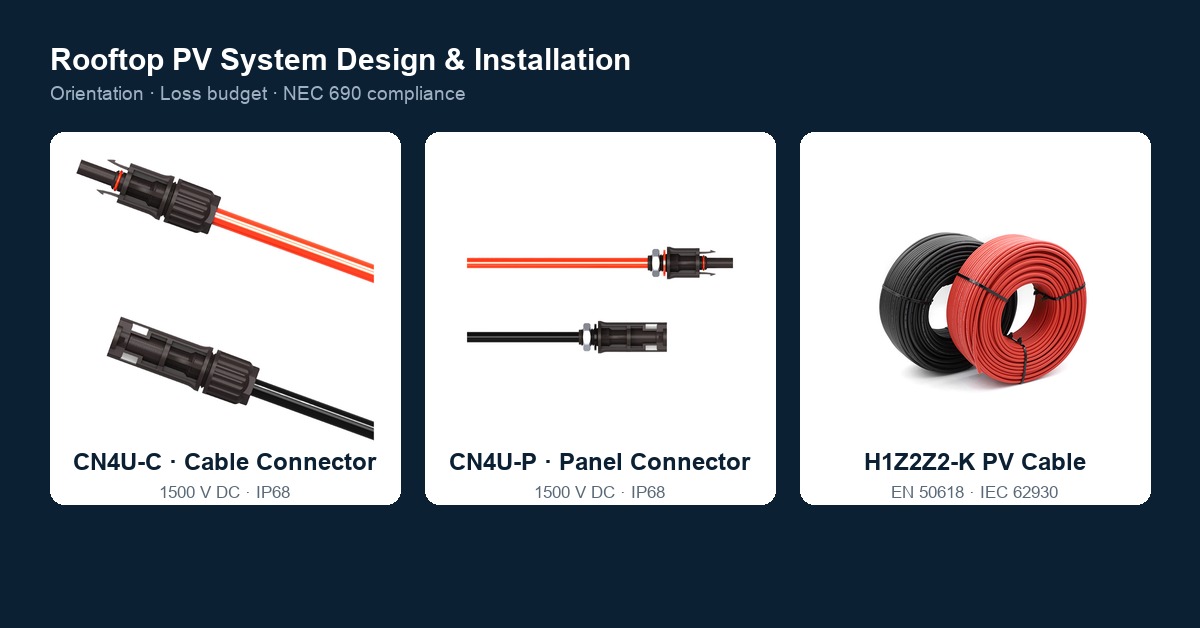
Treasol's CN4U-P is an example of a panel connector made for this role. It uses tin-plated copper contacts, is rated for 52 A maximum current and 1500 V under applicable TUV and UL requirements, offers IP68 protection and runs from -40 °C to +85 °C.
Typical application: Solar module → Panel connector → PV cable
2. Solar Cable Connectors
Solar cable connectors terminate and join PV cables inside an installation.
They matter most when you need to connect pre-terminated cables, extend a cable run or splice two sections of a PV circuit.
A cable connector has to match the cable it is crimped to. The parameters to check:
- Cable cross-section
- Rated current
- Rated voltage
- Contact resistance
- Connector compatibility
- Operating temperature
- Environmental protection
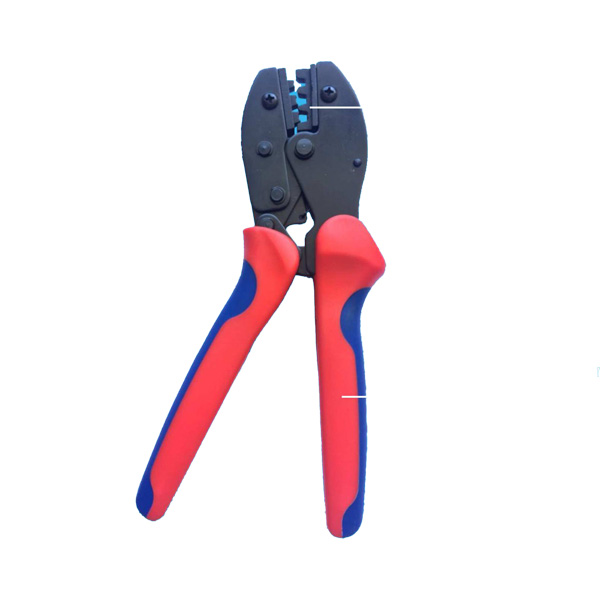
Cable and connector should be treated as one decision, not two. If they do not match, the crimp suffers and so does the long-term reliability of the joint.
3. Solar Branch Connectors
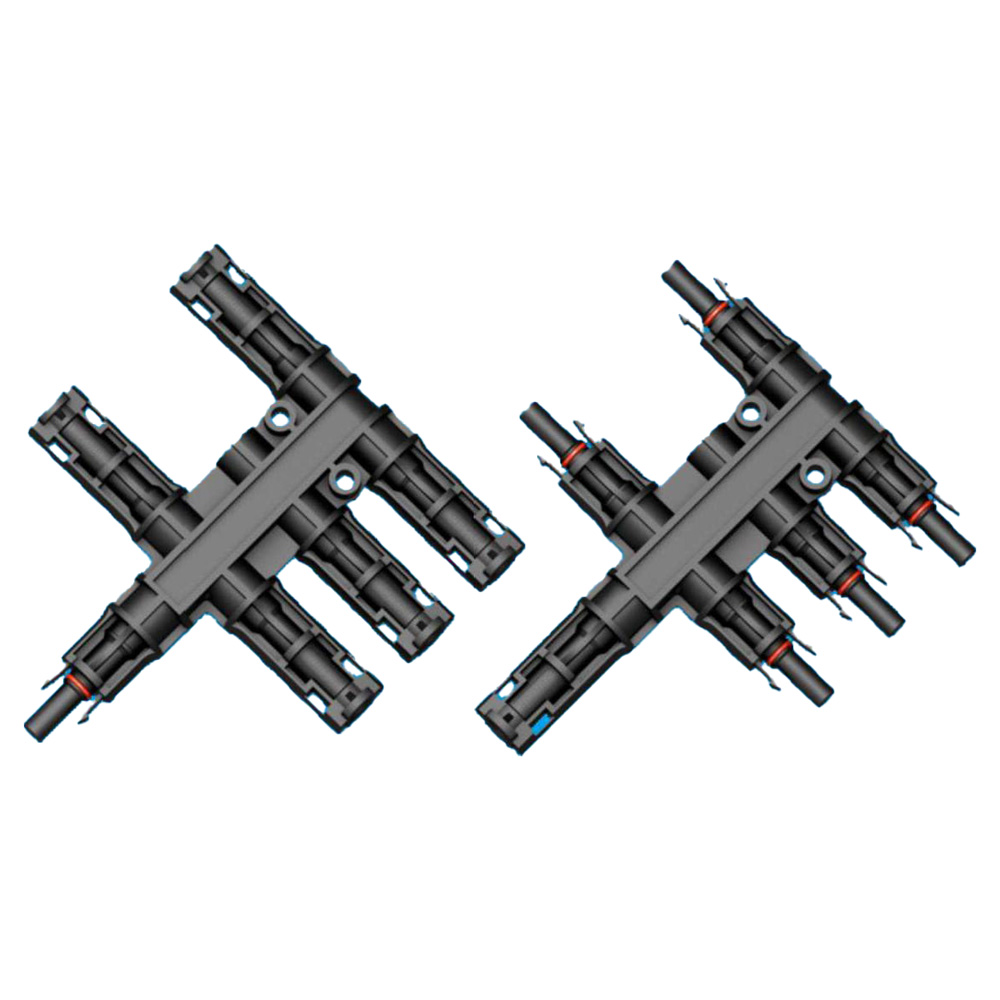
A photovoltaic array usually has several strings running in parallel. Branch connectors combine or distribute connections between those strings.
For example, a branch connector can tie multiple positive or negative PV cables into a single common circuit.
A simplified layout looks like:
PV String A + PV String B → Branch Connector → Combined Output
Branch connectors cut down the amount of field wiring and give certain system layouts a cleaner connection point.
When you pick a branch connector, check:
- Number of connection branches
- Current rating
- Voltage rating
- Cable compatibility
- Polarity
- Environmental protection
- Applicable standards and certification
They show up most often in rooftop systems, commercial installations and larger arrays where several strings have to meet in one place.
4. Solar Fuse Connectors
A solar fuse connector puts a fuse inside the connector, so circuit protection and connection share one component.
They are used where a string or circuit needs overcurrent protection.
Unlike a plain connector, a fuse connector contains a fuse element that interrupts excessive current under the specified fault conditions.
A typical setup:
PV Module → PV Cable → Fuse Connector → PV String
The fuse rating has to be chosen against the system design, module characteristics, applicable electrical requirements and installation conditions.
Treasol's F4C series covers this product type, with models including F4C-200-1085, F4C-212-1038 and F4C-201-1085. The F4C-200-1085, for instance, takes a 10.3 × 85 fuse, is available from 1 A to 30 A, and carries 1500 V ratings under applicable TUV and UL requirements.
On larger sites, a well-chosen fuse connector is a compact way to build overcurrent protection into the connection system itself.
5. PV Diode Connectors
A PV diode connector integrates a diode into the connection assembly.
Diodes serve specific electrical functions in photovoltaic systems, depending on the architecture and what the application demands. A diode can, for example, control current flow and block reverse current under certain operating conditions.
The right diode type, rating and installation position depend on the actual circuit design. A diode connector is useful where a pre-assembled, compact diode connection is preferred.
Treasol makes dedicated PV diode connector products, including the D4A and D4B series, within its photovoltaic connection range.
6. PV Junction Boxes
A junction box is more than a connector — it is the electrical interface between the cell circuit inside a solar module and the external PV cables.
Unlike a simple cable connector, a junction box can hold several electrical functions inside one protected enclosure.
Depending on the design, a PV junction box may contain:
- Electrical connection points
- Bypass diodes
- Cable connections
- Sealing structures
- Module-level protection components
That makes junction boxes a central part of solar module manufacturing. Once built into a module, the junction box is a permanent component of the assembly, so the choice of box matters for the life of the product.
7. Solar Wiring Harness Assemblies
A wiring harness is a step beyond an individual connector.
Instead of shipping a loose connector, a solar wiring harness arrives as a pre-assembled cable-and-connector package:
PV Cable + Connectors + Predefined Cable Length + Assembly
The point is that part of the connection work is done before the material reaches site. That means less field assembly, more consistent cable lengths, and a repeatable connector layout.
Harness assemblies are most useful for:
- Commercial rooftop projects
- Utility-scale solar farms
- Solar module manufacturing
- PV equipment manufacturers
- Projects that repeat the same cable configuration over and over
Treasol supplies wiring harness assemblies as part of its photovoltaic connection product range.
What About MC4 and MC4 Compatible Connectors?
"MC4" comes up constantly in any discussion of solar connectors. It is the most widely adopted connector interface in the PV industry, and most installations you walk onto use something based on it.
But there is a real difference between an original connector and one described as "MC4 compatible."
Physical compatibility does not mean every connector from every manufacturer is safe to mix with every other. Differences in contact geometry, contact materials, housing dimensions, sealing components, manufacturing tolerances and electrical ratings can all affect how a mated pair performs.
So installers and system designers should confirm compatibility from the manufacturer's technical documentation and the applicable certification requirements — not from how the two halves happen to fit together.
Treasol manufactures MC4 compatible solar connectors, and recommends verifying the specific mating combination whenever connectors from different manufacturers are involved.
How to Choose the Right Solar Connector
The right connector follows the application, not the product name. Work through these factors before you settle on one.
1. Rated Voltage
The connector's voltage rating has to fit the system. Modern PV systems run at high DC voltages, so check the rating against the actual system design. Treasol, for example, offers PV connector solutions rated up to 1500 V DC, depending on the product and the applicable requirements.
2. Rated Current
The connector must carry the expected operating current without excessive loss or heating. High-current modules and applications need connectors built for the higher current levels.
3. Cable Size
The connector has to suit the PV cable cross-section. Common sizes are 2.5 mm², 4 mm² and 6 mm², though the right size depends on the system design. The connector, contact and crimping method all have to match the cable specification.
4. Environmental Conditions
PV connectors live outdoors for years. The environment they face includes UV radiation, rain, humidity, temperature cycling, dust, mechanical vibration and outdoor temperature extremes.
An appropriate IP rating and the right material selection matter when the connector is going to sit in weather for a decade or more.
5. Connector Compatibility
If you are considering connectors from different suppliers, verify compatibility. Do not assume two connectors are safe to mate just because they look alike or both claim "MC4 compatible."
6. Certification and Standards
For international PV projects, certification is part of the specification. Depending on the target market and product, requirements can include TÜV, UL, CE, RoHS, IEC 62852 and UL 6703.
Treasol's PV connector products are developed for international applications and include products certified or compliant with applicable TÜV, UL, CE and RoHS requirements. The exact certification for a given product should always be checked against its current technical documentation.
Solar Connector Selection by Application
Different PV projects call for different connection solutions.
| Application | Common Connection Products |
|---|---|
| Residential rooftop PV | Panel connectors, cable connectors, branch connectors |
| Commercial rooftop PV | PV connectors, branch connectors, fuse connectors, wiring harnesses |
| Utility-scale solar farms | PV connectors, branch connectors, fuse connectors, wiring harnesses |
| Solar module manufacturing | Panel connectors, junction boxes, diode solutions |
| Energy storage applications | PV connectors, cable assemblies and customized connection solutions |
| OEM PV equipment | Customized connectors and wiring harness assemblies |
The best fit depends on the electrical architecture, installation environment, cable configuration and applicable standards.
Why Solar Connector Quality Matters
A connector is a small line item in a solar budget, but its failure is felt across the whole system.
A poor connection raises contact resistance and generates heat. Mechanical problems, bad crimping, weak sealing or mismatched mating parts all shorten the life of the joint — and the string around it.
So connector selection should not be a price-only decision.
A professional PV connector manufacturer should be able to supply real technical specifications, quality control information and certification documentation.
Treasol runs an integrated manufacturing setup covering product development, precision molding, automated assembly and quality inspection. The company focuses on photovoltaic connection products and supplies PV connectors, MC4 compatible connectors, cable connectors, branch connectors, fuse connectors, diode connectors, junction boxes and wiring harness assemblies.
Solar PV Connectors: Choosing the Right Solution for Your Project
No single solar connector fits every PV application.
A panel connector, cable connector, branch connector, fuse connector, diode connector, junction box and wiring harness each do a different job inside the photovoltaic connection system.
The right choice comes down to electrical requirements, cable specifications, installation environment, connector compatibility, protection requirements, applicable certifications, project scale and long-term reliability.
For solar installers, distributors, EPC companies and PV equipment manufacturers, knowing these differences helps avoid compatibility problems and pick a connection solution that matches what the project actually needs.
Treasol supplies a full range of photovoltaic connection products for residential, commercial and utility-scale solar applications, with manufacturing and OEM capabilities for customers in global markets.
If you need a specific PV connector, cable assembly, fuse connector, diode connector or a customized solar connection solution, work out the technical requirements of your project first, then match the product to them.